How Do You Use a Cordless Drill?
To use a cordless drill, match the bit to the job, fit it with the battery removed, and clamp the work. Choose low gear and a low clutch setting for screws, or drill mode and a suitable speed for holes.
On this page (10 sections)
- How do you use a cordless drill step by step?
- What do the drill's controls do?
- How do you choose and fit the right bit?
- How do you drive a screw without stripping it?
- How do you drill a straight, clean hole?
- Which cordless drill suits your home projects?
- What mistakes should beginners avoid?
- What safety and care steps matter most?
- Can a cordless drill drill into concrete?
- How should you start using a cordless drill?
To learn how to use a cordless drill, match the bit to the job, fit it with the battery removed, and secure the work. Start slowly, keep the drill aligned, and use the clutch when driving screws.
A drill bit makes holes; a driver bit turns screws. If those jobs are new to you, start with what a drill driver is so you can recognize the tool and its controls.
How do you use a cordless drill step by step?
Set up with the battery removed, then practice starting and stopping on scrap before working on your project. Have the correct bit, eye protection, clamps, and a charged battery ready.
- Read the manual and check the drill, battery, and bit for damage.
- Choose a bit suited to the material or screw head.
- Open the chuck, center the bit between its jaws, and tighten it securely.
- Mark the hole or screw position and clamp loose material.
- Select the gear, direction, and clutch or drill mode while the tool is stopped.
- Install the battery, align the drill, and squeeze the trigger gently.
- Release the trigger when finished and let the bit stop before setting the drill down.
Keep your free hand away from the bit and its exit path. Remove the battery again before changing bits, clearing a jam, or cleaning the tool.
What do the drill's controls do?
The trigger controls speed, the gear selector changes the speed range, and the clutch limits turning force for screws. Drill mode bypasses the clutch so the tool can keep turning while cutting a hole.
Forward drives ordinary right-hand screws and turns standard drill bits in their cutting direction. Reverse removes those screws; let the motor stop before changing direction or gears.
The clutch ring usually has numbered settings, but those numbers aren't precise torque measurements. Start low and adjust for the screw and material rather than copying a number from another drill.
How do you choose a cordless drill speed?
Use low gear for screwdriving and many larger bits, and higher gear for smaller holes when the bit instructions allow it. Within either gear, gentle trigger pressure gives you a slower start.
Metal generally calls for slower drilling as bit diameter increases. If you aren't sure of the speed, check the bit guidance before starting rather than running the drill at full speed.
How do you choose and fit the right bit?
Choose by material and task first, then check that the bit fits your chuck. A wood or metal drill bit doesn't replace a masonry bit, and a drill bit cannot drive a screw.
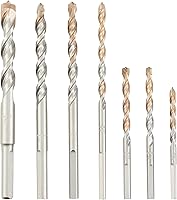
The DeWalt DW1361 suits beginners who need a range of hole sizes for household projects. Its pilot points help start holes on the mark, while the case keeps small bits organized.
Skip this set if your immediate need is masonry drilling or turning screws. Inspect any bit before use and replace one that's bent, chipped, or no longer cutting cleanly.
Insert enough shank for the chuck jaws to grip securely without clamping the cutting flutes. Tighten as the manual directs, remove any chuck key, and check that the bit sits straight.
Which driver bit fits the screw?
Choose a driver bit that fills the screw recess without rocking. A bit can look close to the right size yet slip under pressure and damage the head.
The DeWalt DW2166 suits furniture assembly and repairs involving several screw-head styles. Its removable bit bars help you keep frequently used pieces together.
Skip it if you only need hole-making bits or already have the exact driver bits your project needs. More pieces won't help if none fits the fastener properly.
How do you drive a screw without stripping it?
Use low gear, a low clutch setting, and a snug-fitting bit. Keep the drill in line with the screw so the bit stays fully seated.
Try the setting on matching scrap first. If the clutch clicks before the screw seats, increase it gradually; release the trigger promptly when the head reaches the required depth.
Drill a pilot hole when the screw instructions or material call for one, especially near a wood edge. Size it for the screw and wood rather than making a hole as wide as the threads.
If the bit slips, stop and inspect the fit instead of adding speed. For a stubborn final turn, a hand screwdriver can give you finer control.
How do you drill a straight, clean hole?
Start on a clear mark and keep the drill square from 2 directions. Clamp a backing board beneath wood when you want to reduce splintering where the bit exits.
Begin slowly until the bit forms a shallow seat, then increase speed as appropriate. Apply enough pressure to keep it cutting without forcing the drill or bending the bit.
For deeper holes, withdraw periodically to clear chips as the bit instructions allow. Ease pressure near the far side, where a sudden breakthrough can pull the bit forward.
Stop if the bit binds, produces smoke, or stops making progress. Let everything stop, remove the battery, and check for packed chips, a dull edge, or the wrong bit or speed.
Use a drill guide for holes that must be accurately square or repeatable. Eyeballing the angle is less reliable when fitting aligned hardware.
Which cordless drill suits your home projects?
Choose for your usual work and the kit you need, rather than voltage alone. Comfort, battery supply, and control matter for assembly and repairs; the tool must also support your planned materials and hole sizes.
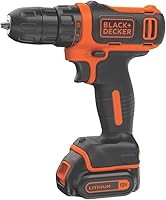
Choose the DeWalt DCD771C2 if you're starting from scratch and want a spare battery ready while another charges. The included charger and storage bag make it a practical kit for moving between home projects.
Skip it if a brushless motor is a priority; the DCD777D1 below is the clearer choice for that requirement. Don't choose either basic drill driver specifically for concrete work.
Choose the DeWalt DCD777D1 for regular drilling and fastening, especially inside dim cabinets. Its light stays on for 20 seconds after trigger release, helping you see the fastener between starts.
DeWalt says its brushless motor offers more runtime than a brushed motor. Skip this set if your main priority is the spare battery supplied with the DCD771C2 kit.
For a broader starting point, see our cordless drill buying guide. Use how to choose a cordless drill for feature checks and 12V vs 20V cordless drills when comparing tool sizes and power needs.
What mistakes should beginners avoid?
Stop and correct slipping, stalling, or poor alignment instead of squeezing the trigger harder. These problems usually need a setup change.
- Using drill mode for delicate screws: select the clutch so turning force is limited.
- Starting at full speed: begin gently to keep the bit on the mark.
- Holding small pieces by hand: clamp them so they cannot spin.
- Continuing with a slipping driver bit: check its size and condition before damaging the screw further.
- Forcing a stalled bit: stop, disconnect the battery, and find the cause.
A larger drill won't correct a mismatched bit or poor workholding. Fix those basics before deciding that you need another tool.
What safety and care steps matter most?
Protect your eyes, secure the work, and check the drilling path before starting. Keep hair, loose clothing, jewelry, and hands away from rotating parts.
Check for hidden wiring and pipes before drilling into walls or floors. A detector helps, but a clear reading alone doesn't prove the path is safe; get qualified help if you cannot establish a clear route.
Use the grip and any auxiliary handle required by the manual. Avoid gloves around rotating parts that could catch them, and use dust extraction and respiratory protection suited to the material.
After use, disconnect the battery and brush away debris without pushing it into vents. Let hot bits cool before handling them, and store bits dry in their case.
Charge batteries with the correct charger and follow the battery's temperature and storage instructions. Stop using a damaged battery or a drill that no longer grips bits securely.
Can a cordless drill drill into concrete?
Concrete needs a tool and masonry bit suited to the hole. Hard concrete or larger holes may require a hammer drill or rotary hammer rather than a basic drill driver.
Don't assume a masonry bit makes every drill suitable. Read whether a cordless drill can drill into concrete and how a drill driver compares with a hammer drill before choosing equipment.
How should you start using a cordless drill?
Start learning how to use a cordless drill with a scrap hole and a few practice screws. Adjust your grip, speed, and clutch until you can start accurately and stop at the intended depth.
Choose the DCD771C2 for its spare-battery kit or the DCD777D1 for its brushless motor and work light. Add the DW1361 for holes or the DW2166 for screws according to your first project.
If repeated fastening becomes your main job, compare a drill and impact driver for home jobs before adding another tool.
Frequently asked questions
How do you use a cordless drill for the first time?
Begin with the correct bit, a clamped scrap piece, and light trigger pressure. Read the manual, remove the battery while fitting the bit, and choose the right mode before reinstalling it.
Wear eye protection and practice starting, stopping, and keeping the drill square before working on your project.
What drill setting should I use for screws?
Use low gear and start with a low numbered clutch setting. Try a screw in matching scrap, then increase the setting if the clutch clicks before the head seats.
Keep the bit aligned and ease off the trigger near the surface; clutch numbers aren't interchangeable between different drills.
Which way should a cordless drill turn?
Use forward for standard drill bits and ordinary right-hand screws, and reverse to remove those screws. Check the direction markings in your drill's manual because switch layouts vary.
Let the motor stop before changing direction, and remove the battery before opening the chuck to replace a bit.
Can you use a cordless drill to drill into concrete?
Only use a cordless drill for concrete when its manual allows the task and you have a suitable masonry bit. Hard concrete or larger holes may require a hammer drill or rotary hammer.
Our guide to drilling into concrete with a cordless drill explains how to choose the tool.