6 Best Cordless Drills for Home Use (October 2026)
The best cordless drills for home use include the DeWalt DCD771C2 20V MAX XR Drill Driver Kit for everyday home repairs, the DeWalt DCD777D1 20V MAX Drill Driver Set for regular DIY projects, and the Milwaukee M12 Fuel 1/2 in. Hammer Drill Driver (Bare Tool) for occasional masonry jobs.
On this page (9 sections)
- Which cordless drill is best for home use?
- The best cordless drills for home use
- How should you choose a cordless drill for your actual jobs?
- Which batteries, bits and accessories do you need?
- How do you set up a cordless drill for the first job?
- What mistakes cause stripped screws and stalled holes?
- Is a drill driver enough for home projects?
- How do you care for a cordless drill between projects?
- Which cordless drill should you choose for your home?
The DeWalt DCD771C2 is the best cordless drill for home use for most households because it covers routine drilling and fastening and includes a spare battery. Choose a more specialized model only when your projects call for hammer mode, a shorter head or features for longer work sessions.
Start with the next few jobs on your list. Flat-pack furniture, curtain brackets and wood shelves need different bits and settings, but they rarely require the most powerful drill you can buy.
Our complete cordless drill guide explains the wider category. If motor type is your main question, read whether a brushless cordless drill is worth it.
Our picks at a glance
-
1
 Best for everyday home repairs
DeWalt DCD771C2 20V MAX XR Drill Driver Kit
9.1/10 our score
See it on Amazon -
2
 Best for regular DIY projects
DeWalt DCD777D1 20V MAX Drill Driver Set
8.6/10 our score
See it on Amazon -
3
 Best for occasional masonry jobs
Milwaukee M12 Fuel 1/2 in. Hammer Drill Driver (Bare Tool)
8.1/10 our score
See it on Amazon
- 4
 Check it
DeWalt DCD801QQ2 20V MAX XR Drill Driver Kit
Best for demanding weekend projects - 5
 Check it
Black+Decker 20V MAX POWERCONNECT Drill Kit with 100-Piece Bit Set
Best for first-time tool buyers - 6
 Check it
Craftsman V20 Brushless Drill Driver Kit
Best for cramped work areas
Which cordless drill is best for home use?
The DCD771C2 is the strongest all-around starting point, while the other picks solve narrower needs. The DCD777D1 suits regular DIY work, and the Milwaukee makes sense when suitable masonry jobs are part of your plans.
We compared motor design, controls, battery arrangements and kit contents against common household work. The order favors a useful home kit over maximum speed or features that many homeowners won't need.
Read the comparison with your existing tools in mind. A bare tool can be a sensible addition to compatible batteries, but a battery-and-charger kit is the simpler starting point for a new household toolbox.
| Product | Best for | Voltage | Chuck | Included | Our score |
|---|---|---|---|---|---|
| DeWalt DCD771C2 20V MAX XR Drill Driver Kit | everyday home repairs | 20V MAX | 1/2 in ratcheting | Two batteries, charger and storage bag | 9.1 |
| DeWalt DCD777D1 20V MAX Drill Driver Set | regular DIY projects | 20V MAX | 1/2 in ratcheting | 2.0Ah battery and charger | 8.6 |
| Milwaukee M12 Fuel 1/2 in. Hammer Drill Driver (Bare Tool) | occasional masonry jobs | 12V | 1/2 in all-metal | Bare tool | 8.1 |
| DeWalt DCD801QQ2 20V MAX XR Drill Driver Kit | demanding weekend projects | 20V MAX | 1/2 in metal ratcheting | Two 4Ah batteries and charger | 7.7 |
| Black+Decker 20V MAX POWERCONNECT Drill Kit with 100-Piece Bit Set | first-time tool buyers | 20V MAX | 10 mm | Battery, charger, bits, sockets and case | 7.4 |
| Craftsman V20 Brushless Drill Driver Kit | cramped work areas | V20 | 1/2 in | 2.0Ah battery and charger | 7.2 |
The best cordless drills for home use
Choose each drill by its strongest practical advantage: a spare battery, brushless motor, hammer mode, extended project kit, accessories or shorter head. The write-ups below explain when that advantage matters and when to choose something else.
DeWalt DCD771C2 20V MAX XR Drill Driver Kit
- Two-speed transmission
- 300 UWO
- Compact design
- Two batteries, charger and storage bag
The most useful starting point for routine household drilling and fastening, with a spare battery to keep work moving. Choose it when a complete drill kit matters more than specialty features.
Pros
- Separate speed ranges for drilling and fastening
- Spare battery included
- Storage bag keeps the kit together
Cons
- No hammer-drill mode for masonry
- Buy bits to match your projects
The DCD771C2 suits homeowners who want one drill for a mixed repair list. Its two speed ranges, 0 to 450 and 0 to 1,500 rpm, give you a slower setting for fastening and a faster setting for drilling.
The 1/2 in ratcheting chuck accepts a useful range of bit shanks. For pilot holes, shelf brackets and small wood projects, choosing the correct bit matters more than chasing a higher top speed.
The included pair of batteries is its main buying advantage. Keep one charged as a spare, and an unexpected flat battery doesn't have to end a project halfway through.
Choose this kit if you want to assemble your own small selection of useful bits rather than buy a broad accessory assortment. A few correctly sized drill and driver bits can cover your immediate jobs without filling the storage bag with pieces you won't use.
Skip it if hammer mode is essential or you specifically want a brushless motor. For occasional household jobs, though, its complete battery setup gives it a clear purpose.
DeWalt DCD777D1 20V MAX Drill Driver Set
- Brushless motor
- Two-speed transmission
- LED with 20-second delay
- 2.0Ah battery and charger
A brushless option for homeowners who use a drill regularly and want to build around DeWalt 20V MAX tools. Its delayed LED shutoff helps with work in dim corners.
Pros
- Brushless motor
- Work light stays on briefly after trigger release
- Compatible with DeWalt 20V MAX tools
Cons
- One battery included
- No hammer-drill mode
The DCD777D1 is a good fit for regular DIY work, especially if you plan to add DeWalt 20V MAX tools. Its brushless motor is the main reason to choose it over the top pick.
DeWalt says that motor design provides longer runtime than a brushed motor. That advantage matters more during a sequence of drilling and fastening jobs than when you're tightening a few screws.
Its LED stays on for 20 seconds after trigger release. In a dim cabinet, that gives you time to check a hole position or screw head without keeping the motor running.
The kit includes a 2.0Ah battery and charger, so you can start without building a battery setup separately. Plan charging around your work if this will be your only compatible battery.
Choose it when frequent use and future tool compatibility matter most. Skip it if a spare battery in the box is your priority, or your next project requires hammer drilling.
Milwaukee M12 Fuel 1/2 in. Hammer Drill Driver (Bare Tool)
- Hammer-drill mode
- Brushless motor
- Mechanical clutch
- 1/2 in all-metal chuck
A compact choice for buyers who need drilling, screw driving and a hammer mode in one tool. Existing compatible batteries make this bare tool easier to add to a home kit.
Pros
- Hammer mode for suitable masonry tasks
- Compact design
- Mechanical clutch for screw driving
Cons
- Battery and charger sold separately
- Hammer mode adds little for furniture assembly
The Milwaukee M12 Fuel suits a household that needs occasional masonry capability alongside ordinary drilling and screw driving. Its hammer mode is the key difference from the drill drivers here.
For a suitable brick or masonry job, pair that mode with a bit made for the material. Turn hammer mode off for wood, metal and screw driving, and don't assume every hard wall should be drilled with hammer action.
The mechanical clutch helps control fastening, while the all-metal chuck holds the bit. Those features make it useful beyond masonry work, so you don't have to choose it solely for wall anchors.
This is a bare tool, making it most convenient for someone with compatible batteries and a charger. Starting a new battery system adds another buying decision before you can begin work.
Skip it if you only need furniture assembly and wood repairs. Our drill driver vs hammer drill guide explains when the extra mode earns its place.
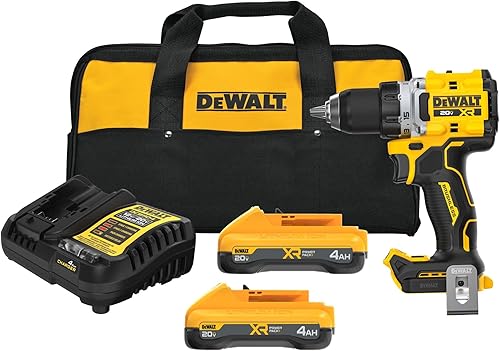
DeWalt DCD801QQ2 20V MAX XR Drill Driver Kit
- Brushless motor
- Two 4Ah batteries
- Two-speed transmission
- Anti-rotation system
A kit for longer drilling sessions, with larger batteries and a system that shuts the drill down during excessive rotational motion. Its features make more sense for involved projects than occasional small repairs.
Pros
- Two 4Ah POWERPACK batteries
- Anti-rotation shutoff
- Adjustable three-position work light
Cons
- Larger battery capacity can be unnecessary for brief tasks
- Does not replace a hammer drill for masonry
The DCD801QQ2 suits longer, more demanding home projects, where battery capacity and control features deserve more attention. It is a better match for an involved wood project than a drill kept mainly for occasional furniture assembly.
The kit includes two 4Ah POWERPACK batteries. That arrangement lets you rotate batteries through a longer work session, although actual runtime depends on the bit, material and load.
Its anti-rotation system shuts the tool down when it senses excessive rotational motion. Treat that as an added control feature while still securing the work and holding the drill as its instructions require.
The adjustable three-position LED helps direct light toward the work. Its two speed ranges reach 650 and 2,000 rpm with no load, giving it a higher upper speed than the top pick.
Choose it when your project list supports the larger battery setup and added controls. Skip it for brief repairs if a simpler kit already covers your needs, and choose a hammer drill separately when masonry requires one.
Black+Decker 20V MAX POWERCONNECT Drill Kit with 100-Piece Bit Set
- 100-piece kit
- 24-position clutch
- Battery and charger included
- POWERCONNECT battery system
A practical first kit for light repairs and furniture assembly, with accessories stored together. Choose it for convenience rather than frequent drilling with larger bits.
Pros
- Drill bits, driver bits and sockets included
- Clutch helps limit overdriving
- Case keeps accessories together
Cons
- Lower maximum speed than the other picks
- 10 mm chuck limits bit-shank size
The Black+Decker kit suits a first-time buyer starting with an empty toolbox. It brings together drill bits, driver bits, sockets, a ratcheting screwdriver and a storage case.
That assortment is useful for furniture assembly and scattered small repairs. You can switch between powered work and the included screwdriver when a final adjustment needs a gentler touch.
Its 24-position clutch gives you settings for screw driving. Start low and increase only as needed, especially with furniture panels or small screws that are easy to overdrive.
The trade-off is a 650 rpm maximum speed and a smaller 10 mm chuck. Choose another model if your planned bits need larger shanks or you expect frequent drilling where a higher speed range would help.
The included masonry bits don't give the drill a hammer mode. Buy this for its convenient household assortment, and choose any wall-drilling tool around the actual wall material.
Craftsman V20 Brushless Drill Driver Kit
- Brushless motor
- 6.2 in tool head length
- Two-speed transmission
- Battery and charger included
The short tool head makes this a useful option for work between nearby surfaces. Measure the space with a bit in place before choosing it for a confined job.
Pros
- Short head for restricted spaces
- Brushless motor
- Variable-speed trigger and built-in LED
Cons
- One battery included
- Bits and holders add to its working length
The Craftsman V20 suits work where the space behind the drill is restricted. Its 6.2 in tool head is a useful starting point for cabinet interiors and areas between nearby surfaces.
Measure the whole working setup before buying for a particular gap. The bit, bit holder and room for your hand all add to the clearance needed, so head length alone doesn't prove a tool will fit.
A brushless motor, two-speed transmission and variable-speed trigger make it suitable for general drilling and fastening as well. Its top no-load speed is 1,900 rpm, and a built-in LED lights the work area.
The kit includes a 2.0Ah battery and charger. It is ready for a new buyer to build around, but you won't have a spare battery included for a longer session.
Choose it because the shorter head solves a real access problem. Skip it if access is easy and the top pick's spare battery would be more useful to your projects.
How should you choose a cordless drill for your actual jobs?
Match the drill to the material, fasteners and working space before comparing headline power. A tool that fits comfortably and gives you useful control is a better household choice than one selected by voltage alone.
Choosing the best home cordless drill for your task list
Write down your next 3 projects and the materials involved. Furniture assembly mainly calls for screw control, while building a wood shelf adds pilot holes and possibly larger holes for hardware.
Wall-mounted items require a separate decision about the wall and anchor. Drywall, wood studs, brick and concrete need different approaches, and a drill's included bits don't remove that distinction.
For frequent long screws, consider whether an impact driver belongs alongside the drill. Our guide to whether you need an impact driver at home helps you decide before buying extra tools.
Choose the chuck around your bits
A chuck's size describes the shank it accepts, not the largest hole the drill can safely make. A large cutting head with a reduced shank can fit the chuck and still demand more than the tool should handle.
Check the drill's instructions for permitted bit types and sizes. Buy the bit for the material first, then confirm both the shank fit and the drill's suitability.
A ratcheting chuck is useful, but correct installation still matters. Seat the bit straight and tighten it as directed, rather than trying to solve slipping by squeezing the trigger harder.
Choose useful control over a high top speed
Low gear generally suits screw driving and work that needs more turning force. High gear suits many smaller drilling tasks, with the correct speed depending on the bit and material.
The trigger controls speed within the selected range. Start slowly to position a bit or engage a screw, then increase speed only when the bit is stable.
A clutch helps stop screws from being driven too far, but its numbers aren't universal torque values. Don't copy a setting from another drill and expect the same result.
Make comfort part of the decision
Check whether you can hold the drill straight with your wrist in a natural position. Repeated overhead work and awkward cabinet positions make balance more important than it seems during a short repair.
Battery size can change the balance and clearance of the assembled tool. Compare the working drill with its battery attached rather than choosing from a bare-tool weight alone.
For more detail, read how to choose a cordless drill. Our 12V vs 20V guide explains why voltage alone doesn't settle the choice.
Which batteries, bits and accessories do you need?
Start with a compatible battery and charger, then buy accessories for the next job. A large piece count is useful only when it includes the sizes and types you will actually use.
Battery platform matters most if you already have cordless tools. Similar voltage labels don't mean different brands' batteries fit, and compatibility should be confirmed for the exact tool and battery system.
Amp-hours describe battery capacity, not a promise of a fixed number of holes. A larger pack can support longer work, but drilling wide holes in thick material uses more energy than driving small screws.
For basic wood projects, choose drill bits sized for your pilot holes and driver bits that match your screw heads. Add a countersink bit when the screw heads need to sit neatly below the surface.
Metal needs suitable metal-cutting bits, while masonry needs masonry bits and an appropriate drilling mode. Keep those choices separate from the number of accessories bundled with the drill.
Add eye protection and clamps before buying seldom-used bit sets. If your budget is tight, our cordless drills under 100 dollars guide can help narrow the kit choices.
How do you set up a cordless drill for the first job?
Charge the battery, fit the correct bit and set the drill for the task before touching the work. A few deliberate checks reduce damaged screws, wandering holes and sudden movement.
- Read the tool and battery instructions. Follow the charging directions and learn the gear, mode and clutch controls before starting.
- Remove the battery while fitting accessories. Center the bit in the chuck, tighten it as directed and check that it is secure.
- Secure the work. Clamp loose pieces to a stable surface and keep your free hand away from the drill's path.
- Choose the mode and gear. Use a low clutch setting for screws and the drilling setting for holes, shifting gears only when the tool has stopped.
- Make a trial on scrap. Use a matching piece of material to adjust screw depth or check a hole before working on the finished surface.
When driving a screw, keep the bit aligned with the screw and apply steady pressure. Stop once the head reaches the intended depth rather than holding the trigger through repeated clutch clicks.
For drilling, mark the position clearly and keep the tool square to the surface. A backing board can reduce splintering as a wood bit exits the far side.
Before drilling a wall, check for hidden wiring and plumbing and follow the anchor's instructions. Our cordless drill use guide covers the basic controls and technique in more detail.
What mistakes cause stripped screws and stalled holes?
The most common avoidable problems come from the wrong bit, poor alignment or too much force. Stop when progress changes suddenly and correct the cause before continuing.
A driver bit that only partly fits the screw recess can slip and damage the head. Match both the pattern and size, then replace worn bits instead of compensating with extra pressure.
Using full speed from the start makes it harder to keep a screw straight. Begin slowly, keep the drill in line with the fastener and raise the clutch setting in small steps when necessary.
A spinning drill bit that isn't cutting may be dull, unsuitable for the material or turning in reverse. More pressure can bend a small bit or heat the work without making useful progress.
Larger bits can catch as they break through. Hold the drill securely, support the work and follow the tool's instructions for grip and any required handle.
Don't force the motor through a stall. Release the trigger, remove the battery before freeing a trapped bit and reconsider the bit size, gear or tool choice.
Is a drill driver enough for home projects?
A drill driver is enough for most furniture assembly, wood repairs and routine drilling in wood or metal. Add another tool when a repeated task calls for a different action.
An impact driver delivers rotational impacts for fastening. It becomes useful for repeated long screws and lets you keep a pilot-hole bit in the drill while the driver holds the screw bit.
A hammer drill adds forward hammering action for suitable masonry. It doesn't replace an impact driver, and a standard drill driver doesn't gain that action from a masonry bit.
Tile and other brittle surfaces need material-specific bits and careful technique, often without hammer action. For repeated or larger concrete holes, consider a rotary hammer suited to the job.
Our drill vs impact driver guide explains which tool fits each fastening task. Choose around the work you expect to repeat rather than buying every tool type at once.
How do you care for a cordless drill between projects?
Keep the drill clean, dry and stored with its accessories organized. Battery care and sharp bits do more for reliable household use than leaving the tool ready on a dusty workbench.
Remove the battery before cleaning the tool or inspecting the chuck. Brush away loose debris, keep ventilation openings clear and avoid soaking the tool or using cleaners its instructions don't allow.
Check bits for bent shanks, damaged cutting edges and worn driver tips. A fresh bit can solve poor cutting or slipping without changing the drill.
Let a hot battery cool before charging, following its instructions. Use the correct charger and keep batteries away from hot cars, damp areas and loose metal objects that could bridge the contacts.
For long storage, follow the battery maker's charge guidance. Before the next project, check the charge and gather the needed bits so a short repair stays a short repair.
Which cordless drill should you choose for your home?
Choose the best cordless drill for home use by the job that will shape your next few projects. Use these decision rules to narrow the six picks.
- Choose the DCD771C2 for a general household kit when having a spare battery matters most.
- Choose the DCD777D1 for regular DIY work when you want a brushless drill and DeWalt 20V MAX compatibility.
- Choose the Milwaukee M12 Fuel for suitable masonry work alongside everyday drilling, especially with compatible batteries already available.
- Choose the DCD801QQ2 for longer projects where its battery setup and added control features have a clear purpose.
- Choose the Black+Decker kit when you need a first collection of household bits and accessories.
- Choose the Craftsman V20 when its shorter head helps solve a measured clearance problem.
Before ordering, match the kit to one real project and confirm the bits and power accessories you'll need. For more choices beyond these six, visit our best cordless drills guide.
Our top 3 picks at a glance
-
1
Best for everyday home repairs
DeWalt DCD771C2 20V MAX XR Drill Driver Kit
9.1/10 our score
See it on Amazon -
2
Best for regular DIY projects
DeWalt DCD777D1 20V MAX Drill Driver Set
8.6/10 our score
See it on Amazon -
3
Best for occasional masonry jobs
Milwaukee M12 Fuel 1/2 in. Hammer Drill Driver (Bare Tool)
8.1/10 our score
See it on Amazon
Frequently asked questions
What is the best cordless drill for home use?
The DeWalt DCD771C2 is the best starting point for most households because its kit covers routine drilling and fastening while providing a spare battery. Choose another model when a particular need takes priority, such as hammer mode for suitable masonry, a brushless motor or an included accessory assortment.
Is a 12V or 20V drill better for home use?
Either can handle household work when the drill suits the task and bit size. Compare control, working size, battery compatibility and kit contents before choosing by voltage.
Our 12V vs 20V drill guide explains which jobs favor a smaller tool and when a larger platform makes sense.
Do I need a hammer drill at home?
You usually don't need hammer mode for furniture, wood shelves or drilling metal. It becomes useful for suitable masonry work with the correct bit, though repeated or larger concrete holes may need a rotary hammer.
Read whether a cordless drill can drill into concrete before choosing a tool for wall anchors.
Should I buy a drill or a drill and impact driver combo?
Buy a drill alone for occasional holes, furniture assembly and small repairs. A combo becomes useful when projects involve repeated pilot holes followed by long screws, since each tool can keep its own bit fitted.
Our drill and impact driver set guide helps you choose a kit around that workflow.


