6 Best Drill and Impact Driver Sets (October 2026)
The best drill and impact driver combo kits include the DeWalt DCK240C2 Drill and Impact Driver Combo Kit for everyday home projects, the DeWalt DCK277D2 Drill and Impact Driver Kit for regular DIY work, and the Craftsman V20 MAX Drill and Impact Driver Kit for shared workshop projects.
On this page (6 sections)
- What makes the best drill and impact driver set for home use?
- How do you choose a set for the jobs you actually do?
- How should you set up a drill and impact driver pair?
- Which mistakes damage screws, bits or the workpiece?
- How do you keep a combo kit ready between projects?
- Which best drill and impact driver set should you choose?
The DeWalt DCK240C2 is the best drill and impact driver set for most home projects because its two batteries let you keep a drill and driver ready together. Choose the brushless DCK277D2 for regular DIY work, or Milwaukee M12 when short tool bodies matter most.
A combo earns its place when you drill pilot holes, then drive screws into them. Leaving the right bit in each tool saves repeated bit changes during shelving, cabinet installation and wood projects.
The tools have different jobs, as our drill vs impact driver guide explains. If your repairs rarely involve more than a few screws, start with our cordless drill buying guide before committing to a pair.
Our picks at a glance
-
1
 Best for everyday home projects
DeWalt DCK240C2 Drill and Impact Driver Combo Kit
9.3/10 our score
See it on Amazon -
2
 Best for regular DIY work
DeWalt DCK277D2 Drill and Impact Driver Kit
8.4/10 our score
See it on Amazon -
3
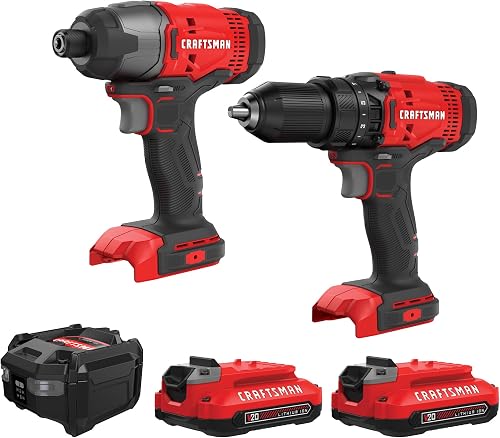 Best for shared workshop projects
Craftsman V20 MAX Drill and Impact Driver Kit
8.0/10 our score
See it on Amazon
- 4
 Check it
Milwaukee M12 Subcompact Brushless 2-Tool Combo Kit
Best for overhead installation - 5
 Check it
DeWalt DCK250QQ2 Hammer Drill and Impact Driver Kit
Best for masonry and framing - 6
 Check it
Craftsman V20 Drill Set and Impact Driver Kit
Best for occasional fastening projects
What makes the best drill and impact driver set for home use?
The best set matches your projects, battery needs and working space. The DCK240C2 leads for general household work, while the other picks serve buyers who need brushless tools, less bulk or hammer drilling.
TrustyTinker compared the supplied tools, battery contents, chuck types and controls for common drilling and fastening jobs. The recommendations below focus on what changes your work, including when a kit is more than you need.
| Product | Best for | Battery platform | Batteries | Included | Our score |
|---|---|---|---|---|---|
| DeWalt DCK240C2 Drill and Impact Driver Combo Kit | everyday home projects | 20V MAX | 2 x 1.3Ah included | Charger and contractor bag | 9.3 |
| DeWalt DCK277D2 Drill and Impact Driver Kit | regular DIY work | 20V MAX | 2 x 2.0Ah included | Charger and contractor bag | 8.4 |
| Craftsman V20 MAX Drill and Impact Driver Kit | shared workshop projects | V20 20V MAX | 2 included | Charger, storage bag and two bits | 8.0 |
| Milwaukee M12 Subcompact Brushless 2-Tool Combo Kit | overhead installation | M12 12V | 7.6 | ||
| DeWalt DCK250QQ2 Hammer Drill and Impact Driver Kit | masonry and framing | 20V MAX XR | 2 x 4Ah included | Charger | 7.6 |
| Craftsman V20 Drill Set and Impact Driver Kit | occasional fastening projects | V20 20V MAX | 1 x 2Ah included | Charger, storage bag and two bits | 7.0 |
DeWalt DCK240C2 drill and impact driver set for home projects
DeWalt DCK240C2 Drill and Impact Driver Combo Kit
- Compact drill and impact driver
- Two 1.3Ah 20V MAX batteries
- Charger and contractor bag
- LED lights with 20-second delay
A straightforward pair for drilling pilot holes and driving screws during household repairs. Two batteries let you leave a battery on each tool.
Pros
- Two batteries keep both tools ready
- Compact bodies for confined work
- Delayed LED lights on both tools
Cons
- Smaller battery capacity than the DCK277D2
- No hammer drilling mode
The DCK240C2 suits homeowners building a tool collection for shelves, basic wood projects and repairs. Its main advantage is keeping both tools ready, so moving from a pilot hole to a screw takes only a tool swap.
The DCD771 drill delivers up to 300 UWO, and the impact driver supplies up to 1,400 in-lb of torque. These measure different things, so the numbers should not be compared directly.
Both tools have LEDs with a 20-second delay, useful when you release the trigger to check your bit position inside a cabinet. The impact driver's one-handed chuck accepts 1 in bit tips with a 1/4 in hex shank.
The supplied 1.3Ah packs suit a kit aimed at short household tasks, though buyers planning longer sessions should compare battery capacity. Two packs give you flexibility, but they do not guarantee uninterrupted work while one charges.
Skip it if hammer drilling is a requirement, or if you specifically want brushless tools. Our DeWalt DCK240C2 combo review gives this pair a closer look.
DeWalt DCK277D2 brushless drill and impact driver kit
DeWalt DCK277D2 Drill and Impact Driver Kit
- Brushless DCD777 drill and DCF787 impact driver
- Two 2.0Ah batteries
- Charger and contractor bag
- Quick-release hex chuck
Choose this brushless pair for recurring projects that alternate between holes and screws. Its two batteries have more capacity than those supplied with the DCK240C2.
Pros
- Brushless tools
- Two batteries included
- Variable speed trigger for controlled starts
Cons
- No hammer drilling mode
- Lower impact torque than the DCK250QQ2
Choose the DCK277D2 if drilling and screwdriving are regular weekend jobs. Its brushless tools and two 2.0Ah batteries are the main reasons to choose it over the first DeWalt pair.
The DCD777 has a 1/2 in drill chuck, and the DCF787 uses a quick-release hex chuck. That gives the drill room for a wider range of bit shanks while keeping driver-bit changes simple.
The impact driver delivers up to 1,500 in-lb of torque. For furniture fittings and small screws, controlled trigger pressure and the right bit matter more than using all that output.
A variable speed trigger lets you begin slowly before increasing speed. Start a screw straight, keep the bit seated and ease off as its head reaches the surface.
Skip this kit if occasional light repairs are your only work, or if your next project requires hammer action. The DCK240C2 vs DCK277D2 comparison helps with the choice between these two packages.
For the motor choice itself, read whether a brushless cordless drill is worth it.
Craftsman V20 MAX drill and impact driver kit with two batteries
Craftsman V20 MAX Drill and Impact Driver Kit
- CMCD700 drill and CMCF800 impact driver
- Two batteries and charger
- Storage bag and two bits
- LED lights on both tools
Two batteries let a helper drive screws while you drill pilot holes. The included bits and storage bag cover a few useful basics.
Pros
- Both tools can have a battery fitted
- Bag and two bits included
- Two-speed drill gearbox
Cons
- Lower impact torque than the CMCK201D1
- Included bits do not cover every fastener
The Craftsman CMCK200C2 suits buyers who want to start with two working tools on the V20 platform. It also fits shared projects where one person drills pilot holes while another drives screws.
The CMCD700 drill has a 280 UWO motor and a gearbox covering 0–350 RPM in low and 0–1,500 RPM in high. Low gear suits work that needs slower turning, while higher speed is useful for many smaller drilling tasks.
The CMCF800 impact driver delivers up to 1,460 in-lb of torque and offers one-handed drop-and-load bit changes. Both tools have LEDs and contoured handles.
The included PH #2 and double-sided bits cover some common screw heads, but plan your accessories around the actual fasteners. A slightly wrong bit can damage a screw even when the tool has plenty of power.
Skip it if you already have suitable batteries on another platform and want to share packs across tools. Within Craftsman's choices here, pick this package over the single-battery option when frequent drilling and fastening swaps are central to your work.
Milwaukee M12 subcompact drill and impact driver set
Milwaukee M12 Subcompact Brushless 2-Tool Combo Kit
- Brushless M12 drill and impact driver
- 5.4 in drill and 4.3 in impact driver
- Two 12V batteries required
- Metal 3/8 in drill chuck
Short bodies suit cabinet interiors and overhead work where clearance matters. Check the supplied battery and charger contents before ordering.
Pros
- Short tool bodies
- Brushless design
- Drill weighs 2 lb with a CP battery
Cons
- Lower impact torque than the other picks
- 3/8 in chuck restricts compatible shank sizes
Choose the Milwaukee M12 pair for overhead installation and confined spaces. The drill is 5.4 in long and the impact driver is 4.3 in long, giving you clear dimensions to compare with the space available.
With CP batteries, the drill weighs 2 lb and the impact driver weighs 1.7 lb. Those figures are useful when judging a tool you expect to hold above shoulder height.
The drill's metal 3/8 in chuck restricts the shank sizes it can accept. Check your planned bits, especially larger boring accessories, rather than assuming every drill bit will fit.
The impact driver delivers up to 1,100 in-lb of torque, the lowest stated figure among these picks. Buy this set for access and manageable tool size rather than choosing it for demanding fastening.
Skip it if your planned accessories require a larger chuck, or sustained heavy fastening is the main job. Confirm the supplied batteries and charger before ordering, since the accessory contents determine what else you need to start.
DeWalt DCK250QQ2 hammer drill and impact driver kit
DeWalt DCK250QQ2 Hammer Drill and Impact Driver Kit
- DCD806 hammer drill and DCF845 impact driver
- Two 4Ah 20V MAX XR POWERPACK batteries
- Two-speed hammer drill transmission
- Impact driver rated at 1,825 in-lb torque
The hammer drill adds a mode for suitable masonry work, while the impact driver suits larger fastening jobs. Choose it when those jobs are part of your plans.
Pros
- Hammer drilling mode
- Two 4Ah POWERPACK batteries included
- Highest stated impact torque in this group
Cons
- Hammer mode adds little for furniture assembly
- Larger battery capacity may be unnecessary for brief repairs
The DCK250QQ2 suits buyers whose plans include suitable masonry holes and larger fasteners. Its hammer drill gives it a role the standard drill kits here do not cover.
The DCD806 has speed ranges of 0–650 and 0–2,000 RPM. Use the appropriate drilling mode for the material, keeping hammer action off for wood, metal and screwdriving.
The DCF845 brushless impact driver delivers up to 1,825 in-lb of torque and 3,400 RPM. That is the highest stated impact torque in this group, but it does not set the safe fastening limit for every screw or joint.
Two 4Ah POWERPACK batteries and a charger are included. The larger capacity is relevant to longer projects, though actual runtime depends on the material, accessory and workload.
Skip it for mostly flat-pack furniture and brief household repairs. Hammer action adds little to those jobs, and an impact driver still needs a careful trigger hand when fastening small hardware.
For structural connections, follow the fastener instructions rather than assuming more torque makes a stronger joint.
Craftsman V20 drill and impact driver kit with one battery
Craftsman V20 Drill Set and Impact Driver Kit
- CMCD702 drill and CMCF801 impact driver
- One 2Ah battery and charger
- Storage bag and two bits
- LED lights on both tools
This pair suits short projects where you can drill the holes first, then move the battery to the impact driver. Frequent tool changes favor a two-battery kit.
Pros
- Impact driver rated at up to 1,800 in-lb
- Bag and two bits included
- LED lights on both tools
Cons
- One supplied battery must move between tools
- VersaTrack clips and accessories sold separately
The Craftsman CMCK201D1 fits short projects done in stages. Drill the pilot holes first, then move the supplied battery to the impact driver for fastening.
Its CMCD702 drill delivers up to 300 UWO and 1,700 RPM, while the CMCF801 impact driver supplies up to 1,800 in-lb of torque. The driver output is useful to consider for larger screws, but it does not remove the need for pilot holes where required.
The kit includes one 2Ah battery, a charger, a bag and two bits. Both tools have LEDs, and they support VersaTrack organization with clips and accessories sold separately.
The single pack is the deciding tradeoff. If every screw needs a pilot hole immediately beforehand, moving that battery repeatedly interrupts the workflow that makes a combo useful.
Skip it for shared projects or constant tool changes unless you already have another compatible pack. It makes more sense for occasional solo work where you can group drilling and fastening into separate steps.
How do you choose a set for the jobs you actually do?
Start with the hardest recurring job, then check the space and accessories it requires. A rare project should not outweigh the tasks you expect to do every month.
Match the drill type to your material
A standard drill/driver handles ordinary holes in wood and metal with suitable bits. A hammer drill adds repeated blows for suitable masonry drilling, but that mode stays off for ordinary drilling and fastening.
A few small masonry holes and repeated holes in hard concrete are different demands. Check the bit, hole size and material requirements before assuming a hammer drill combo covers the whole job.
Our guide to choosing a cordless drill explains voltage, chuck size and batteries. Compare our cordless drill sets if accessory packages are also part of your decision.
Choose batteries for your workflow
Two batteries help most when you switch tools often. You can leave both tools powered, lend one to a helper or rotate a pack onto the charger.
One battery is workable when you drill all the holes before fastening. It is less convenient when fitting parts requires repeated adjustments between the two tools.
Amp-hours describe battery capacity, not a promised number of completed jobs. Within a compatible platform, higher capacity can support longer work, but larger packs can also change tool balance and clearance.
Match the exact battery family, charger and tool requirements. Equal voltage numbers do not make DeWalt, Craftsman and Milwaukee batteries interchangeable.
For more context on tool size and output, see our 12V vs 20V drill comparison.
Check access with the bit attached
Tool length is only part of the clearance you need. Add the drill bit or driver bit, then allow room to position the tool straight against the work.
A short impact driver can still be awkward behind a drawer slide if you fit a long bit holder. Plan around the full working setup rather than the bare tool body.
Overhead work adds another concern: you must support the tool while keeping the bit aligned. A manageable tool and battery combination can matter more here than extra maximum output.
Decide whether the second tool will earn its place
Buy a combo when separating drilling from fastening will save repeated bit changes. For occasional small screws, a drill's clutch may already provide the control you need.
Compare our best impact drivers guide for fastening-focused choices. If most of your work is making holes, our best cordless drills for home use covers drill-only options.
Budget for bits that fit the job
Included bits are a starting point, not a full project kit. You may need drill bits for the material, matching driver bits, a countersink and clamps.
Use impact-rated accessories in the impact driver and check their shank fit. For drills, check chuck capacity against shank diameter, which can differ from the cutting diameter.
Do not compare UWO directly with in-lb of torque. Even within torque figures, maximum output does not explain trigger control, access or how neatly you can finish a small fastener.
How should you set up a drill and impact driver pair?
Put the hole-making accessory in the drill and the matching driver bit in the impact driver. Set up both tools before you begin so the second tool actually saves time.
Secure the work and check the drilling path
Clamp loose pieces instead of holding them near the bit. Support the work so the bit has clearance after it breaks through, and use scrap backing when a clean exit matters.
Before drilling a wall, check for wiring and pipes and choose fixings suited to the wall material. Wear eye protection, and use hearing protection for noisy impact work.
Fit the accessories with the battery removed
Remove the battery before changing bits or making adjustments. Seat a drill bit straight in the chuck, tighten it properly and keep your hands away from the cutting edges.
Insert the correct hex-shank accessory into the impact driver's holder and check that it locks. A bit that fits the screw head poorly should be changed before you apply power.
Set the drill for the task
Use drilling mode for holes and screwdriving clutch settings for controlled fastening. Start with a low clutch setting for small screws, then increase it only as needed.
Choose speed for the bit and material rather than using maximum speed for every hole. Large wood-boring bits and metal drilling often need slower speeds than small holes in soft wood.
Our guide to using a cordless drill explains the controls and basic technique.
Begin slowly and stop at the right depth
Start the pilot hole with light trigger pressure, keeping the bit square to the surface. Use the screw or anchor instructions to choose hole diameter and depth.
Start the screw slowly with the driver bit fully seated. Ease off near the surface; for delicate hardware, finish with a clutch-controlled drill or hand screwdriver.
Which mistakes damage screws, bits or the workpiece?
The most common mistakes are using the wrong bit, forcing a stalled tool and overdriving screws. More output will not correct any of those problems.
Treating every fastener like a deck screw
Small cabinet screws and flat-pack fittings can strip or crush the material around them. Use gentle trigger pressure, and avoid the impact driver where the hardware instructions call for hand tightening.
A screw seated deeper than intended is not automatically more secure. Overdriving can damage wood fibers, split an edge or weaken the connection.
Skipping a needed pilot hole
Pilot holes help near board ends, in hard wood and with larger screws. Follow fastener guidance, since a hole that is too large can reduce the screw's grip.
Keep countersinking separate from drilling the pilot hole. A flush screw head needs room for its head shape without removing too much supporting material.
Forcing the tool through a bind
Release the trigger if a bit jams or the tool stalls. Remove power before freeing a stuck accessory or clearing material by hand.
Check whether the bit is dull, the speed is wrong or chips need clearing. Repeatedly pulling the trigger against a jam adds stress without solving the cause.
Using the impact driver as a precision torque tool
An impact driver's maximum torque figure is not a selectable tightening value. Do not use it to judge final tightness on a connection with a specified torque requirement.
Use the proper tool for the required final tightening. This matters especially for fasteners where damage or loosening could create a hazard.
How do you keep a combo kit ready between projects?
Keep the tools clean, the accessories sharp and the batteries stored as instructed. A few minutes after a project prevent avoidable problems at the next one.
Remove batteries before cleaning, then wipe away dust with a dry cloth or soft brush. Keep vents, chucks and battery contacts clear without washing the tools or adding unapproved lubricants.
Inspect bits for rounded tips, chips and bending. Replace damaged accessories rather than trying to compensate with extra pressure.
Let hot tools and packs cool before further work or charging, following the manual. Store batteries away from heat, moisture and loose metal items that could bridge the contacts.
Keep drill bits and driver bits in separate labeled holders inside your storage setup. Store the charger cord without tight bends, and check it for damage before plugging it in.
Which best drill and impact driver set should you choose?
Choose the best drill and impact driver set for your workflow: how often you swap tools, where you work and whether masonry drilling is a real requirement.
- Everyday home repairs: Pick the DCK240C2 for a straightforward pair that keeps both tools powered.
- Regular DIY projects: Choose the DCK277D2 for brushless tools and a larger supplied battery capacity than the first DeWalt kit.
- Shared work on Craftsman V20: Choose the CMCK200C2 so each tool can have its own battery.
- Cabinet interiors and overhead installation: Pick Milwaukee M12 for its short bodies.
- Masonry and larger fastening jobs: Choose the DCK250QQ2 when its hammer mode has a clear purpose.
- Occasional work in separate stages: Consider the CMCK201D1 if moving one battery between tools fits your pace.
Before ordering, write down your next project's material, fasteners and required bits. If that task list still leaves the second tool without a clear role, read whether you need an impact driver at home and decide from the work.
Our top 3 picks at a glance
-
1
Best for everyday home projects
DeWalt DCK240C2 Drill and Impact Driver Combo Kit
9.3/10 our score
See it on Amazon -
2
Best for regular DIY work
DeWalt DCK277D2 Drill and Impact Driver Kit
8.4/10 our score
See it on Amazon -
3
Best for shared workshop projects
Craftsman V20 MAX Drill and Impact Driver Kit
8.0/10 our score
See it on Amazon
Frequently asked questions
Do you need both a drill and an impact driver?
You need both when projects regularly alternate between drilling holes and driving screws. Keeping a drill bit in one tool and a driver bit in the other saves repeated changes.
For occasional assembly, a drill alone may be enough; our guide to whether you need an impact driver explains the choice.
Can an impact driver replace a drill?
An impact driver can drill some holes with suitable hex-shank bits, but a drill is the better main tool for controlled drilling. Its chuck accepts more shank types, and screwdriving clutch settings help with delicate fastening.
Read when you can use an impact driver as a drill before buying bits.
Should you choose a 12V or 20V drill and impact set?
Choose the tool size and battery platform that fit your work. The Milwaukee M12 pair favors confined and overhead jobs, while the 20V choices offer other battery setups and fastening outputs.
Check compatibility with existing tools, then use our 12V vs 20V drill guide to weigh the tradeoffs.
Is a hammer drill necessary in a combo kit?
A hammer drill is useful when your plans include suitable masonry holes. Wood, metal and furniture assembly do not need hammer action, and demanding concrete work may call for a different tool.
The DCK250QQ2 adds that mode; read whether you need a hammer drill at home before making it a requirement.


