7 Best Impact Drivers for Home Use (October 2026)
The best impact drivers for home use include the DeWalt DCF845B 20V MAX XR Impact Driver (Tool Only) for varied home projects, the DeWalt DCF787D1 20V MAX Impact Driver Kit for first-time driver buyers, and the DeWalt DCF809B ATOMIC Compact Impact Driver (Tool Only) for cramped repair jobs.
On this page (10 sections)
- How we chose the best impact drivers for home use
- How these impact drivers compare
- Best impact drivers for common home jobs
- Do you need an impact driver for home use?
- Should you choose a kit or a tool-only impact driver?
- Which impact driver features matter most at home?
- How do you set up an impact driver before the first screw?
- What mistakes damage screws and workpieces?
- How do you care for a cordless impact driver?
- Which best impact driver should you choose for your next project?
The best impact driver for most home users is the DeWalt DCF845B if you already own compatible batteries and want control across different screw-driving jobs. Starting without batteries?
Choose the DCF787D1 for routine work or the DCF845P1 for a three-speed kit.
An impact driver earns its place when you're driving long screws, repairing a fence or fastening many boards. For small furniture screws and general drilling, your drill driver may already cover the job.
Read our drill versus impact driver guide to choose the right tool type. If you need both tools, compare the best drill and impact driver sets before buying them separately.
Our picks at a glance
-
1
 Best for varied home projects
DeWalt DCF845B 20V MAX XR Impact Driver (Tool Only)
8.8/10 our score
See it on Amazon -
2
 Best for first-time driver buyers
DeWalt DCF787D1 20V MAX Impact Driver Kit
7.9/10 our score
See it on Amazon -
3
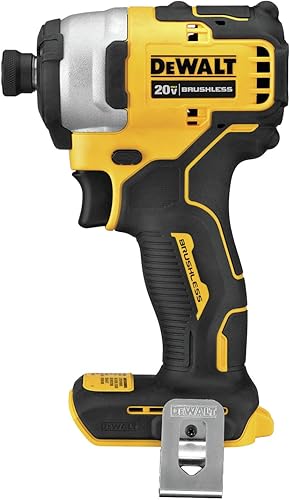 Best for cramped repair jobs
DeWalt DCF809B ATOMIC Compact Impact Driver (Tool Only)
7.8/10 our score
See it on Amazon
- 4
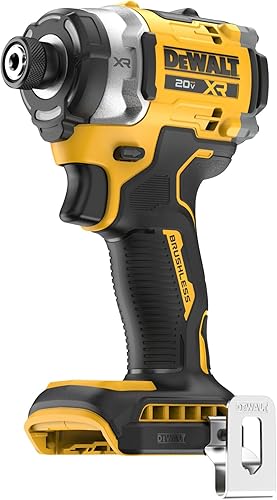 Check it
DeWalt DCF860B 20V MAX XR Impact Driver (Bare Tool)
Best for demanding fastening projects - 5
 Check it
DeWalt DCF845P1 20V MAX Impact Driver Kit
Best for starting larger projects - 6
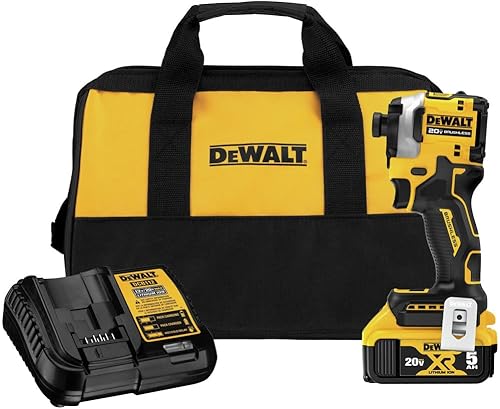 Check it
DeWalt DCF850P1 ATOMIC 20V MAX Impact Driver Kit
Best for cabinet installation projects - 7
 Check it
Craftsman V20 Brushless Compact Impact Driver Kit
Best for routine household repairs
How we chose the best impact drivers for home use
We favored useful control and a clear fit for home projects, rather than ranking these drivers by maximum torque alone. We compared their speed controls, access, battery packages and fastening output.
That puts the DCF845B first for buyers with compatible power parts. A lower-ranked kit can still be the better buy for someone starting fresh, while a shorter driver can be the right choice for a cramped installation.
These picks are mostly DeWalt models, so this guide is especially useful for comparing options within that battery system. The Craftsman kit gives buyers another platform to consider.
How these impact drivers compare
The main choice is between a bare tool, a complete kit and a shorter body. Use the table to narrow the packages, then choose around your actual work rather than one headline number.
| Product | Best for | Torque | Speed | Package | Our score |
|---|---|---|---|---|---|
| DeWalt DCF845B 20V MAX XR Impact Driver (Tool Only) | varied home projects | 1,825 in-lb | Up to 3,400 RPM | Tool only; battery and charger separate | 8.8 |
| DeWalt DCF787D1 20V MAX Impact Driver Kit | first-time driver buyers | 1,500 in-lb | Up to 2,800 RPM | Battery, charger and belt hook | 7.9 |
| DeWalt DCF809B ATOMIC Compact Impact Driver (Tool Only) | cramped repair jobs | 1,700 in-lb | Tool only; battery and charger separate | 7.8 | |
| DeWalt DCF860B 20V MAX XR Impact Driver (Bare Tool) | demanding fastening projects | Up to 2,500 in-lb | Up to 3,800 RPM | Tool only; battery and charger separate | 7.6 |
| DeWalt DCF845P1 20V MAX Impact Driver Kit | starting larger projects | 1,825 in-lb | Up to 3,400 RPM | 5Ah battery, charger, belt hook and bag | 7.5 |
| DeWalt DCF850P1 ATOMIC 20V MAX Impact Driver Kit | cabinet installation projects | 1,825 in-lb | 5Ah battery, charger, belt hook and bag | 7.4 | |
| Craftsman V20 Brushless Compact Impact Driver Kit | routine household repairs | 1,000 in-lb | 2Ah battery and charger | 7.3 |
A maximum torque figure describes available output, not a recommended tightening value for your screws. No-load speed also describes the tool running without fastening resistance, rather than how quickly every screw will go in.
Best impact drivers for common home jobs
Choose the DCF845B for varied work with existing batteries, then look at the other picks for a specific need. Included power parts, tighter access or demanding fastening can matter more than the overall ranking.
DeWalt DCF845B 20V MAX XR Impact Driver (Tool Only)
- Brushless motor
- 3-speed setting
- Variable speed trigger
- Integrated 3-LED work light
A strong choice for households with DeWalt 20V MAX batteries that want separate speed settings for different fastening jobs.
Pros
- Three selectable speeds
- Variable speed trigger
- Belt hook included
Cons
- Battery and charger sold separately
- Less maximum torque than the DCF860B
Best impact driver for varied projects: DeWalt DCF845B
The DCF845B suits a home workshop where the next job might be fence repair, shelf construction or replacing a few outdoor screws. Its separate speed settings let you select a range before using the trigger to adjust within it.
That gives you a practical way to begin slowly and move to faster driving when the screw is straight and the material allows it. The brushless motor delivers up to 1,825 in-lb and 3,400 RPM, with three LEDs to illuminate the fastener.
Buy it if you already have DeWalt 20V MAX batteries and a charger that are available when you work. The included belt hook is useful when moving between fastening points, provided you attach and use it as directed.
Skip the bare tool if you need to build a battery setup from scratch. The DCF845P1 provides the same driver family in a kit, making it the more direct route for a new user.
DeWalt DCF787D1 20V MAX Impact Driver Kit
- Brushless motor
- Battery and charger included
- Compact design
- LED with 20-second delay
A straightforward starter kit for routine screw-driving jobs, with the battery and charger included.
Pros
- Includes core power parts
- Variable speed trigger
- Light stays on after trigger release
Cons
- Lower maximum torque than the other DeWalt picks
- No separate three-speed selector specified
The DCF787D1 suits someone buying an impact driver for ordinary household projects without existing DeWalt power parts. It includes a battery, charger and belt hook, so the core buying decision is simpler.
Its brushless motor provides up to 1,500 in-lb and 2,800 RPM. A variable speed trigger controls driving pace, while the LED remains on for 20 seconds after release, helping you inspect a screw head without running the motor.
Choose it for repairs and repeated fastening when you want a straightforward kit. Its compact design also makes it worth considering when work involves reaching past nearby obstacles.
Skip it if separate speed ranges are a priority or you regularly plan demanding fastening jobs. The DCF845P1 offers three-speed control, while a drill driver may be more useful if most of your work involves holes and small screws.
For that distinction, see what a drill driver does.
DeWalt DCF809B ATOMIC Compact Impact Driver (Tool Only)
- 5.1 in front-to-back length
- Brushless motor
- Variable speed trigger
- Three LEDs
A compact addition to an existing DeWalt battery collection for repairs where an obstruction limits access.
Pros
- Compact body
- Three work lights
- Removable belt hook
Cons
- Battery and charger sold separately
- Longer front to back than the DCF850
The DCF809B makes sense as an addition to a DeWalt battery collection when repairs involve limited access. Its 5.1 in front-to-back body is useful to compare against the space behind a fastener.
The brushless motor provides up to 1,700 in-lb, with trigger-based speed control and three LEDs. A removable belt hook gives you another way to keep the tool nearby between tasks.
Choose it for jobs near cabinet sides, framing or other obstacles where a longer body gets in the way. Measure with your intended bit in mind, since a short driver can still become awkward with a long bit holder attached.
Skip it if you need a battery and charger included. Also compare the DCF850P1 if front-to-back clearance is your main concern, since that model has a shorter stated body and comes as a kit.
The DCF809B is a compact option, but it isn't the shortest choice here.
DeWalt DCF860B 20V MAX XR Impact Driver (Bare Tool)
- Brushless motor
- 3-speed mode select
- Variable speed trigger
- Nine built-in LEDs
The highest-torque option in this group suits buyers whose work regularly involves larger fasteners and demanding screw-driving tasks.
Pros
- Highest maximum torque in this group
- Three selectable speed modes
- Nine work lights
Cons
- Battery and charger sold separately
- Extra output offers little benefit for delicate assembly
The DCF860B is for buyers whose projects regularly call for demanding fastening, rather than occasional small repairs. Its 2,500 in-lb maximum torque is the highest in this group, paired with a no-load speed up to 3,800 RPM.
Three speed modes and a variable speed trigger provide ways to manage that output. DeWalt describes modes 1 and 2 as matched to installation speeds for commonly used self-drilling and tapping screws.
Follow the tool manual and fastener instructions for those applications. A mode choice doesn't replace a screw's required installation method or final tightening check.
Nine built-in LEDs help illuminate the work area, and the battery and charger are separate. Choose it if you have compatible power parts and a clear need for the extra output.
Skip it for flat-pack furniture, small hardware and other work where avoiding damage matters more than driving force. Those jobs often call for a drill clutch or hand screwdriver.
DeWalt DCF845P1 20V MAX Impact Driver Kit
- Brushless motor
- 3-speed setting
- 5Ah battery and charger included
- Integrated 3-LED work light
Choose this DCF845 kit when you need the power parts and want three-speed control for a mix of household and outdoor projects.
Pros
- Includes 5Ah battery
- Three selectable speeds
- Bag keeps the kit together
Cons
- Duplicates power parts if you already have them
- Included battery adds bulk compared with a smaller pack
The DCF845P1 is the practical alternative to the top pick when you need the whole power package. It includes the DCF845 driver, 5Ah battery, charger, belt hook and kit bag.
Choose it for a mix of repairs and larger screw-driving projects when separate speed settings matter to you. The bag also gives the battery, charger and driver a shared home between jobs.
This is primarily a package decision, rather than a reason to expect different fastening behavior from the bare DCF845. Don't buy extra kit parts simply because the box looks more complete if your current setup already covers them.
Skip this kit if you have enough compatible batteries and a working charger. If the included battery feels bulky for the work you plan, consider how a suitable smaller pack would fit your existing system.
Battery capacity alone won't tell you how many screws a project will allow per charge; fasteners, material and driving load all affect that result.
DeWalt DCF850P1 ATOMIC 20V MAX Impact Driver Kit
- Less than 4 in front-to-back
- Brushless motor
- 3-speed control
- 5Ah battery and charger included
A short-bodied kit for fastening near cabinet walls and other obstacles, with separate speed settings and the power parts included.
Pros
- Shortest stated front-to-back body here
- Battery and charger included
- Three-speed control
Cons
- Battery and grip still need clearance
- Extra kit parts may duplicate existing equipment
The DCF850P1 is the strongest fit here when cabinet walls or nearby framing restrict front-to-back access and you also need a kit. Its body measures less than 4 in front to back, the shortest stated measurement among these picks.
It combines a brushless motor, three-speed control and a variable speed trigger. Maximum output is 1,825 in-lb with speed up to 3,250 RPM, and three LEDs help illuminate recessed work.
The package includes a 5Ah battery, charger, belt hook and contractor bag. Choose it for cabinet installation and other close-quarter fastening where a shorter body addresses a real obstruction.
Skip it if your main problem is clearance beneath the handle or around your hand. A short motor housing doesn't shrink the battery, grip, screw or accessory.
For hinge adjustments and small cabinet hardware, use a hand screwdriver for the final tightening when power could strip the hole or damage the fitting.
Craftsman V20 Brushless Compact Impact Driver Kit
- 5.02 in tool-head length
- Brushless motor
- 2Ah battery and charger included
- Onboard LED
A compact Craftsman starter kit for buyers focused on ordinary fastening tasks rather than the highest available output.
Pros
- Battery and charger included
- Compact head
- Onboard work light
Cons
- Lowest maximum torque in this group
- Creates a separate battery system for DeWalt users
The Craftsman V20 kit suits buyers who want a compact driver for routine repairs and aren't committed to DeWalt batteries. It includes a 2Ah battery and charger, with an onboard LED for the fastening point.
Its brushless driver has a 5.02 in tool head and a maximum torque of 1,000 in-lb. That's the lowest figure in this group, so choose it around ordinary screw-driving needs rather than as a substitute for the higher-output picks.
It can make sense for household projects where the included power parts and compact head are the main attractions. Avoid choosing it solely because its voltage label resembles that of another battery system.
Skip it if you already have DeWalt batteries and want to keep one charger setup. Also look higher in this group if larger fasteners will be a regular part of your work, rather than an occasional exception.
Do you need an impact driver for home use?
An impact driver is worth adding when long screws and repeated fastening are regular jobs. Its rotational impacts help turn a fastener as resistance rises, making it a useful partner to a drill.
For a project with pilot holes, keep the drill bit in the drill and the driver bit in the impact driver. Moving between the two tools avoids changing accessories at every hole.
A drill driver remains the more flexible first tool for most households. Its adjustable clutch helps limit driving force on small screws, while its chuck accepts a wider range of bits.
An impact driver also isn't the same as an impact wrench for automotive nuts, or a hammer drill for suitable masonry work. Similar names describe different jobs.
Our guide to whether you need an impact driver at home can help you decide if your planned work justifies another tool.
Should you choose a kit or a tool-only impact driver?
Choose a kit if you lack compatible power parts, and a bare tool if your existing setup is ready for it. Check the exact battery family and approved compatibility, since matching voltage numbers aren't enough.
Also think about availability during a project. If your only battery stays on a drill for pilot holes, a second tool without another battery still leaves you swapping parts.
Match battery capacity to how you work
A higher amp-hour capacity generally means more stored charge within the same battery system. It doesn't increase the tool's stated voltage, and it doesn't guarantee a fixed runtime.
Larger-capacity packs often add bulk, which matters when reaching into cabinets or working above shoulder height. Choose around the whole tool with its battery attached, rather than the bare body alone.
Plan for charging breaks
A kit with one battery provides a starting setup, not continuous operation while that battery charges. For occasional repairs, a planned break may be fine; a larger project may benefit from another approved battery.
Read the charger instructions for permitted temperatures and indicators. Let a hot pack cool as directed, and don't assume slow charging means either the battery or tool has failed.
Which impact driver features matter most at home?
Prioritize speed control, usable clearance and battery fit before maximum output. Those features affect everyday fastening choices more often than the largest torque figure.
Speed ranges help manage the start and finish
A variable speed trigger changes speed as you press it. Separate speed settings let you choose a range first, which can make it easier to keep the tool from accelerating more than intended.
Use a lower range for starting screws, approaching the surface and learning how a fastener responds. Move higher when the screw is stable and the material and instructions allow it.
A speed setting isn't a calibrated torque limit. Release the trigger when the head seats instead of waiting for the tool to decide the screw is tight enough.
Measure the full path to the screw
Front-to-back body length matters near walls and inside cabinets, but the bit and screw also take up space. Check that you can hold the driver straight, rather than merely squeeze it into the opening.
A longer bit can reach past an obstruction, while a shorter accessory can reduce total length. Use an accessory suited to impact driving and avoid stacking extensions without a clear need.
Treat torque as capacity, not a target
Higher available torque helps with demanding fasteners, but too much driving can snap screws, strip threads or crush softer material. A small screw doesn't become stronger because the driver has more output.
For structural connectors and other specified applications, follow the fastener's installation directions. Use a torque wrench where a precise final torque is required.
All seven picks have brushless motors, so that feature doesn't separate this group. Our guide to brushless versus brushed cordless tools explains the motor difference if you're comparing other options.
For the wider tool choice, our cordless drill buying guide explains where drills, hammer drills and impact drivers fit.
How do you set up an impact driver before the first screw?
Start with the correct bit, a secured workpiece and a low speed. A few checks before driving help prevent damaged screws and slips.
- Read the tool manual, charge an approved battery and check the driver for damage.
- Remove the battery before fitting or inspecting accessories, following the manual's procedure.
- Match the bit exactly to the screw recess and use an impact-rated accessory.
- Insert the accessory fully into the collet and confirm it locks in place.
- Clamp loose work so it can't turn, and check for hidden wires or pipes before fastening.
- Wear eye and hearing protection, keep hands clear and begin on scrap when possible.
A bit that almost fits is a common cause of damaged screw heads. Worn tips also slip more easily, so replace a rounded bit rather than pressing harder to compensate.
Start straight and stop at the surface
Hold the bit in line with the screw and apply enough forward pressure to keep it seated. Begin slowly so the screw starts where you intend instead of skating across the work.
Watch the screw head as it approaches the surface and ease off the trigger. For delicate fittings, stop early and finish by hand.
Use pilot holes when the job calls for them
Pilot holes can reduce splitting near board ends and help screws enter dense wood. Follow the screw maker's guidance for hole size, depth and any countersink.
Self-drilling or specialty screws have their own instructions, so don't apply one drilling rule to every fastener. For more on preparing holes, see how to use a cordless drill.
What mistakes damage screws and workpieces?
The most common avoidable mistake is continuing to drive after the fastener has seated. Impact noise tells you the mechanism is working, not that the joint needs more tightening.
Don't use the tool's sound as a finishing signal. Watch the head and joint, especially in softwood, thin sheet material and small hardware.
Trying to force a stalled screw
Stop if the screw stops advancing, the bit slips repeatedly or the tool becomes unusually hot. Remove the battery before inspecting for a worn bit, damaged fastener or unsuitable pilot hole.
More trigger pressure won't fix the wrong screw or an obstruction. Back out carefully and find the cause before another attempt.
Using the wrong fastener outdoors
Choose screws and coatings suited to the material and exposure, including any requirements for treated lumber. An impact driver can't make an unsuitable screw resist corrosion or carry a specified load.
For decks and structural work, use the required fasteners and installation method. General-purpose screws aren't interchangeable with approved connector fasteners.
Treating every screw as a power-tool job
Small machine screws and furniture fittings can cross-thread before you notice resistance. Start them by hand, and use a hand tool for final tightening when the assembly calls for it.
How do you care for a cordless impact driver?
Keep vents clear, accessories sound and batteries protected. Remove the battery before cleaning or checking the tool, and follow its manual for maintenance.
Brush away dust with a soft brush and wipe the housing with a dry cloth. Don't spray cleaner or oil into the motor or collet unless the manual specifically directs it.
Inspect bits for cracks, wear and rounded tips before a project. Stop using a driver with a damaged collet, unusual vibration or a battery that won't lock securely.
Store the tool dry, with loose screws and metal objects away from battery contacts. Follow battery storage guidance and keep packs away from excessive heat.
For longer fastening sessions, pause if the tool or battery becomes unusually hot. Don't push through repeated shutdowns without checking the manual and finding the cause.
Which best impact driver should you choose for your next project?
Choose the best impact driver for the work you repeat most, then select the package that fits your battery setup. Use these decision rules to finish your shortlist:
- Existing DeWalt batteries, varied projects: DCF845B for separate speed settings and general fastening.
- First driver, routine repairs: DCF787D1 for an included battery and charger.
- Existing batteries, restricted access: DCF809B if its body clears your work area.
- Frequent demanding fastening: DCF860B when you have a clear need for higher output.
- Starting larger projects: DCF845P1 for the DCF845 with power parts and a bag.
- Cabinet work with limited clearance: DCF850P1 for the shortest stated body here in a kit.
- Routine repairs outside DeWalt: Craftsman V20 if its package fits your jobs and battery plans.
Before ordering, identify the longest screws you'll drive and the tightest space you'll work in. Those two details, plus your existing batteries, will narrow the choice more usefully than maximum torque alone.
If your project list still centers on drilling holes and small assembly work, use our drill versus impact driver guide to decide which tool to buy first.
Our top 3 picks at a glance
-
1
Best for varied home projects
DeWalt DCF845B 20V MAX XR Impact Driver (Tool Only)
8.8/10 our score
See it on Amazon -
2
Best for first-time driver buyers
DeWalt DCF787D1 20V MAX Impact Driver Kit
7.9/10 our score
See it on Amazon -
3
Best for cramped repair jobs
DeWalt DCF809B ATOMIC Compact Impact Driver (Tool Only)
7.8/10 our score
See it on Amazon
Frequently asked questions
What is the best impact driver for home use?
The DeWalt DCF845B is the best impact driver here for varied home projects if you already have compatible batteries. Its separate speed settings help you adapt to different screws and materials.
Choose the DCF845P1 for that driver with power parts included, or the DCF787D1 for a straightforward starter kit.
Do I need an impact driver if I own a cordless drill?
You need one most when long screws or repeated fastening become regular jobs. A drill remains useful for holes and controlled screw driving with a clutch.
For occasional furniture assembly, it may already do enough. Read whether you need an impact driver before adding another tool.
Can an impact driver drill holes?
Yes, with suitable impact-rated hex-shank drill bits, but a drill driver remains the better general drilling tool. Round-shank bits won't fit a hex collet, and impact action isn't suitable for every material or accessory.
Read whether you can use an impact driver as a drill before choosing bits.
Should I buy an impact driver kit or a bare tool?
Buy a kit when you need a compatible battery and charger, and choose a bare tool when you already have both. Check the exact battery system rather than voltage alone.
Also consider whether your existing battery is available during projects or usually stays attached to another tool.
How do I choose the right impact driver for home projects?
Start with battery compatibility, then choose the control and clearance your jobs require. Multiple speed settings help with varied fastening, while a short body helps near obstacles.
Higher torque matters more for demanding work. Our drill versus impact driver guide explains when a different tool makes more sense.


