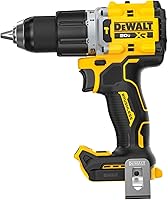
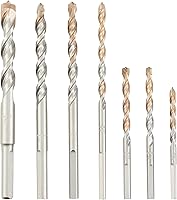
5 Best Hammer Drills for Home Use (October 2026)
The best hammer drills for home use include the DeWalt DCD996B 20V MAX XR Hammer Drill Driver (Tool Only) for varied home projects, the Milwaukee M12 Fuel 1/2 in. Hammer Drill Driver (Bare Tool) for small household repairs, and the DeWalt DCD806B 20V MAX XR Hammer Drill (Tool Only) for control-conscious DIYers.
On this page (9 sections)
- Which is the best hammer drill for home use?
- How do you choose a hammer drill for your home's walls?
- Which size, chuck and controls matter at home?
- Should your existing batteries decide which drill to buy?
- How do you set up a hammer drill for masonry anchors?
- Which common mistakes damage holes, bits or fasteners?
- Should you choose a hammer drill or an impact driver?
- How do you care for a hammer drill between projects?
- Which hammer drill should you choose for your home?
The best hammer drill for home use is the DeWalt DCD996B if your projects span everyday repairs and occasional masonry drilling. Its three speeds and included side handle make it our first choice for homeowners who need more than a compact repair drill.
Choose the Milwaukee M12 Fuel when a smaller tool matters more, or the DeWalt DCD799B when you want short-head access with DeWalt 20V MAX batteries. The right choice starts with your actual projects, especially the material and hole size.
A hammer drill adds rapid blows along the bit as it turns. That action helps with suitable masonry work, while ordinary drilling and fastening call for hammer mode to be switched off.
If masonry isn't on your project list, start with whether you need a hammer drill at home. Our cordless drill guide covers the simpler tool many households need.
Our picks at a glance
-
1
 Best for varied home projects
DeWalt DCD996B 20V MAX XR Hammer Drill Driver (Tool Only)
8.2/10 our score
See it on Amazon -
2
 Best for small household repairs
Milwaukee M12 Fuel 1/2 in. Hammer Drill Driver (Bare Tool)
8.1/10 our score
See it on Amazon -
3
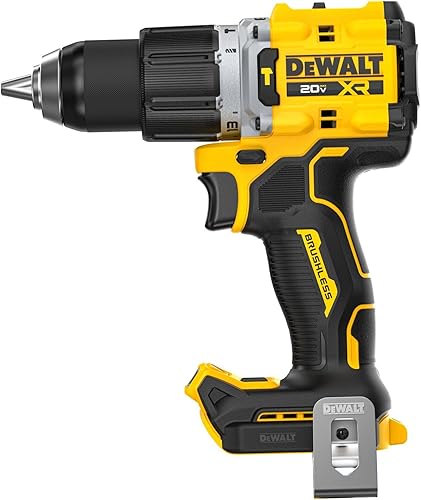 Best for control-conscious DIYers
DeWalt DCD806B 20V MAX XR Hammer Drill (Tool Only)
7.9/10 our score
See it on Amazon
- 4
 Check it
DeWalt DCD799B ATOMIC Compact Hammer Drill (Tool Only)
Best for cramped repair spaces - 5
 Check it
DeWalt DCD1007B 20V MAX XR Hammer Drill (Battery Not Included)
Best for major renovation projects
Which is the best hammer drill for home use?
The DCD996B is the strongest all-around recommendation here for varied home projects. The Milwaukee M12 Fuel is the better starting point when compact size and routine repairs drive the decision.
These choices reflect the supplied features and their fit for household jobs. A higher score doesn't mean every homeowner should buy a larger tool.
| Product | Best for | Platform | Speeds | Chuck | Our score |
|---|---|---|---|---|---|
| DeWalt DCD996B 20V MAX XR Hammer Drill Driver (Tool Only) | varied home projects | 20V MAX | 3 | 1/2 in | 8.2 |
| Milwaukee M12 Fuel 1/2 in. Hammer Drill Driver (Bare Tool) | small household repairs | M12 | Up to 1,500 rpm | 1/2 in | 8.1 |
| DeWalt DCD806B 20V MAX XR Hammer Drill (Tool Only) | control-conscious DIYers | 20V MAX | 2 | 1/2 in | 7.9 |
| DeWalt DCD799B ATOMIC Compact Hammer Drill (Tool Only) | cramped repair spaces | 20V MAX | Up to 1,650 rpm | 1/2 in | 7.6 |
| DeWalt DCD1007B 20V MAX XR Hammer Drill (Battery Not Included) | major renovation projects | 20V MAX | 3 | 1/2 in | 7.2 |
DeWalt DCD996B: best home hammer drill for varied projects
DeWalt DCD996B 20V MAX XR Hammer Drill Driver (Tool Only)
- Brushless motor
- Three-speed transmission
- 1/2 in ratcheting metal chuck
- Three-mode LED
A flexible choice for homeowners moving between repairs and masonry drilling. The included side handle adds a second grip point for jobs that call for it.
Pros
- Three speed choices
- Chuck has carbide inserts for bit grip
- Includes 360-degree side handle
Cons
- Battery and charger sold separately
- 4 lb before adding a battery
Buy the DCD996B if you expect to move between different drilling tasks and want three gear choices. Its included 360-degree side handle gives you a second grip point for work that calls for two-handed control.
The ratcheting metal chuck has carbide inserts for bit grip. That's useful when the bit needs to stay secure through repeated starts, stops and changes in load.
Its three-mode LED includes a spotlight setting with a 20-minute shutoff. That can help in a dim repair area, though you still need enough room lighting to see the whole work surface.
The main tradeoff is its 4 lb tool weight before the battery. For a few light repairs or long periods of reaching, the smaller Milwaukee or compact DeWalt may fit your needs better.
Skip this model if tight access is your main problem or you only need a tool for furniture assembly. Choose it for a varied project list where the extra gear choice and supporting handle have a clear use.
Milwaukee M12 Fuel: a smaller choice for routine repairs
Milwaukee M12 Fuel 1/2 in. Hammer Drill Driver (Bare Tool)
- 12V brushless motor
- Compact design
- All-metal 1/2 in chuck
- Mechanical clutch
A compact option for homeowners who want one drill for routine repairs and occasional suitable masonry holes. Its mechanical clutch helps control screw driving.
Pros
- Compact body for limited working space
- All-metal chuck
- Mechanical clutch for fastening
Cons
- Battery and charger sold separately
- M12 batteries do not serve DeWalt 20V MAX tools
Choose the Milwaukee M12 Fuel if most of your work involves household repairs, with occasional masonry drilling within its limits. Its 6 x 2 x 7 in body makes it worth considering where a larger drill would crowd your hands.
The mechanical clutch is useful for screw driving because it lets you limit driving force. Start with a low clutch setting and raise it only enough to seat the screw without damaging the surface.
Its brushless motor and all-metal chuck give it features beyond a basic compact drill. The reason to choose it here is its fit for smaller jobs, rather than a claim that every home needs a larger battery platform.
Skip it if you're choosing mainly for repeated large holes or a demanding renovation drilling schedule. Also think twice about starting an M12 battery setup if your other tools already use DeWalt batteries.
Don't judge working clearance by body dimensions alone. A long masonry bit and the space needed behind your hand can still make an otherwise compact tool awkward.
DeWalt DCD806B: rotation control without the largest body
DeWalt DCD806B 20V MAX XR Hammer Drill (Tool Only)
- Brushless motor
- Anti-Rotation System
- Two speed settings
- Three-position LED
Choose this model when rotation control matters more than having a third gear. The Anti-Rotation System shuts the tool down when it senses excessive rotational motion.
Pros
- Anti-Rotation System
- Variable trigger and two speed ranges
- Adjustable LED for dim work areas
Cons
- Battery and charger sold separately
- Two gear choices rather than three
Buy the DCD806B if you want rotation control in a 20V MAX drill and don't need a third gear. Its Anti-Rotation System senses excessive rotational motion and shuts the tool down, with a red indicator showing when it engages.
The two no-load speed ranges are 0–650 rpm and 0–2,000 rpm. Use the lower range for work that calls for slower turning, following the bit and tool instructions rather than assuming full speed is always better.
At 3.1 lb before the battery, it offers a different weight tradeoff from the heavier DeWalt picks. Its adjustable three-position LED lets you direct light toward the work.
Choose it when the shutoff feature is a priority for projects where a bit could bind. That feature supports correct handling; it doesn't replace a secure grip or any handle required by the manual.
Skip it if compact access is your first concern and the DCD799B better fits your space. Our DeWalt 20V MAX vs XR guide explains the labels if you're comparing tools within the platform.
DeWalt DCD799B: short-head access for cramped repairs
DeWalt DCD799B ATOMIC Compact Hammer Drill (Tool Only)
- 6.49 in tool head length
- Brushless motor
- 1/2 in ratcheting chuck
- On-tool LED
A short-head choice for repairs near cabinets, corners and other obstacles. It suits homeowners who want compact access while staying with DeWalt 20V MAX batteries.
Pros
- Short head helps with access
- Brushless motor
- On-tool LED
Cons
- Battery and charger sold separately
- Head length excludes the bit and battery
Choose the DCD799B when space behind the bit is limited and you want to stay on DeWalt's 20V MAX platform. Its 6.49 in head length is the useful measurement for repairs near an inside corner or cabinet.
That measurement covers the head only. Add the bit's exposed length, and allow room for the battery, your hand and a straight approach to the hole.
The tool combines a brushless motor with an on-tool LED and a maximum speed of 1,650 rpm. It suits buyers who value access more than the extra gear choices of the larger DeWalt models.
Skip it if you mainly want the included side handle of the DCD996B or the rotation shutoff feature of the DCD806B. Those solve different problems from fitting a short tool into a crowded work area.
A compact drill also can't fix a bad drilling angle. If an obstacle prevents you from keeping the bit aligned, change the setup before starting rather than leaning the bit sideways.
DeWalt DCD1007B: for a demanding renovation plan
DeWalt DCD1007B 20V MAX XR Hammer Drill (Battery Not Included)
- Three-speed metal transmission
- Anti-Rotation System
- 1/2 in ratcheting metal chuck
- Pivoting three-position LED
A choice for homeowners planning demanding drilling rather than occasional light repairs. Its metal transmission and rotation control come with more weight to carry.
Pros
- Three-speed all-metal transmission
- Anti-Rotation System
- Pivoting work light
Cons
- Battery and charger sold separately
- 5 lb before adding a battery
Consider the DCD1007B when your projects include demanding drilling and larger holes within its limits. DeWalt describes it for large-diameter holes in wood, metal and concrete.
Its three-speed all-metal transmission, chuck with carbide inserts and Anti-Rotation System fit that role. The pivoting three-position LED helps direct light at a hole that your hand or tool body might shade.
The cost in handling is 5 lb before adding a battery. That is a substantial tool for hanging a few shelves, especially if much of the work involves reaching or holding the drill above shoulder level.
Buy it because you have a clear drilling task that needs its features. Don't choose it simply because you want the most powerful-sounding tool in the cupboard.
Skip it for occasional light repairs, and don't assume it replaces a rotary hammer for repeated concrete work. A tool that suits the material and hole size matters more than choosing the biggest conventional hammer drill.
How do you choose a hammer drill for your home's walls?
Choose by wall material and anchor requirements first. Brick, mortar, concrete block and poured concrete can call for different drilling methods, and a wall's painted surface doesn't tell you what's behind it.
A shelf bracket on drywall usually doesn't require hammer action. A masonry wall may, but the anchor instructions should set the hole diameter, depth and approved material.
Match the drill to the hole, not just the wall
A few small anchor holes are a different task from making repeated deep holes in dense concrete. Frequency matters because slow progress, repeated clearing and tool heat become bigger concerns over a long drilling session.
For repeated concrete work, compare a rotary hammer suited to the job. It uses a different hammer mechanism and bit system from a conventional hammer drill.
Our guide to using a cordless drill for concrete explains that choice in more detail. Don't keep forcing a bit that stops making useful progress.
Check whether hammer mode is allowed
Use hammer action only when the bit, material and fastener instructions call for it. Tile, brittle finishes and weak masonry need particular care because vibration can damage the surface around a hole.
For tiled walls, use the correct method for the tile before addressing the material underneath. Don't assume the same bit and mode are right for every layer.
Also check for pipes and wiring before drilling. A drill's power or control features won't tell you whether the chosen spot is clear.
Which size, chuck and controls matter at home?
Prioritize comfortable handling, suitable speed control and access over headline output figures. A tool you can hold straight is more useful than extra power you can't control in the available space.
All five picks use a 1/2 in chuck, but that describes the shank capacity of the chuck. It doesn't mean the drill can make every type of 1/2 in hole in every material.
Check the whole working space
Measure the space for the drill, bit and attached battery. Also allow enough room to grip the tool as directed and keep your wrist in a comfortable position.
A short head can help near an obstacle, while a large battery can make the lower part of the tool harder to place. These are separate parts of the fit decision.
For repeated overhead work, consider how long you'll hold the tool up. Breaking the task into shorter periods can be more practical than carrying a larger drill for occasional extra capacity.
Understand the gear, trigger and clutch
The gear selector changes the drill's speed range, while the trigger controls speed within that range. Lower gears generally favor slower turning under heavier loads; higher gears suit work that calls for faster rotation.
A screw-driving clutch limits driving force when used in the proper mode. It isn't the same as an Anti-Rotation System, and neither feature should be treated as permission to brace the tool poorly.
Follow the manual when changing gears or modes, usually with the tool stopped. For a wider explanation of these controls, read how to choose a cordless drill.
Should your existing batteries decide which drill to buy?
Your batteries should narrow the choice when the tools suit the work. All five picks are sold without batteries and chargers, so starting a new platform adds more than another drill to your kit.
Milwaukee M12 and DeWalt 20V MAX are separate systems. Match the exact tool platform, battery and charger rather than assuming similar-looking packs will work together.
Balance runtime with handling
Battery capacity affects how long you can work between charges, but larger packs also change weight and balance. For a few household holes, comfortable handling may matter more than carrying the largest available pack.
For longer projects, a spare charged battery can reduce interruptions. It also lets you take a break and inspect the bit while the first pack charges.
Use the battery types recommended for the tool and application. Don't assume that every compatible pack gives the same performance on a demanding drilling job.
Build around the projects you actually do
If you already own suitable DeWalt batteries, there are several reasons here to stay with that platform. If your household tools use M12, the Milwaukee avoids adding another charging setup.
Starting from scratch gives you more freedom, but it also makes a complete kit worth comparing. A drill and impact driver set may suit you better if your project list includes plenty of fastening.
How do you set up a hammer drill for masonry anchors?
Start with the anchor instructions, a suitable masonry bit and a clear drilling spot. The hole must match the fastener system, so don't choose the bit size by eye or use the screw's diameter as a substitute.
- Confirm the wall material. Check that the anchor is approved for solid brick, hollow block, concrete or the material you're drilling.
- Check the area. Look for wiring and pipes, and avoid a location you can't assess safely.
- Fit the correct bit. Remove the battery before changing bits, center the shank in the chuck and tighten it as directed.
- Set the required depth. Account for the anchor instructions and any allowance they specify for dust.
- Choose the mode and gear. Follow the tool, bit and anchor directions, then arrange any required handle.
- Plan dust control. Wear eye and hearing protection and use suitable dust collection and respiratory protection for masonry dust.
Keep the bit aligned with the planned hole. Start under control so it doesn't wander, then use steady pressure that lets the bit cut without forcing it.
Clear debris as directed, and stop if progress drops sharply. A worn bit, packed hole or unexpected material needs attention before more pressure.
Clean the finished hole using the anchor maker's method. Dust left inside can affect how the fastener holds, even when the hole looks neat at the surface.
For basic grip, trigger and bit-changing steps, see how to use a cordless drill. Practice the controls with the tool stopped before starting an awkward wall hole.
Which common mistakes damage holes, bits or fasteners?
The biggest mistakes are using the wrong mode, forcing a stalled bit and ignoring hole preparation. Each can turn a small repair into a loose anchor or damaged surface.
Leaving hammer mode on for ordinary work
Turn hammer mode off for wood, metal and screw driving. The added vibration doesn't help those tasks and makes careful control harder.
For screws, use a suitable driver bit and the proper driving mode. Begin gently, especially near the surface of finished furniture or thin hardware.
Pushing harder when progress stops
More pressure won't correct a dull bit or unsuitable tool. Stop if the drill stalls, the bit binds or the tool begins to twist unexpectedly.
Remove the battery before inspecting or changing the bit. Let hot accessories cool, and don't try to clear a jam by repeatedly pulling the trigger.
Making a hole wider by rocking the drill
Keep the bit straight rather than sweeping it around to gain depth. An oversized hole can prevent an anchor from gripping as intended.
If the hole ends up wrong, follow the anchor maker's repair guidance. Driving the fastener harder won't restore the missing wall material.
Confusing work lights with a clear view
An LED helps illuminate the contact point, but it doesn't reveal hidden services or show the entire work area. Use separate lighting if shadows hide the bit angle, depth mark or nearby obstacles.
Should you choose a hammer drill or an impact driver?
Choose a hammer drill for suitable masonry holes and an impact driver for frequent fastening. They apply impacts differently and solve different problems.
A hammer drill pushes along the bit as it rotates. An impact driver applies rotational blows that help turn fasteners, so it isn't a direct replacement for masonry hammer action.
Our drill vs impact driver comparison matches the tools to common projects. For repeated long screws, the best impact drivers for home use roundup can help you choose a second tool.
If most of your work is assembling furniture or drilling wood, a regular drill driver may be enough. Don't add hammer capability solely because the name sounds more capable.
How do you care for a hammer drill between projects?
Keep the chuck, vents, bits and batteries clean and dry. A little care after masonry work prevents dust from being carried straight into the next repair.
Remove the battery before cleaning or inspecting the tool. Brush away loose debris and follow the manual's cleaning method rather than blowing dust toward your face or deeper into the housing.
Check bits for bent shanks, damaged tips and heavy wear. Replace worn accessories instead of compensating with more force.
Let a hot tool and battery cool before storage or charging, following the battery instructions. Store the drill where it won't be exposed to moisture, excessive heat or loose metal objects around battery contacts.
Don't add oil to the chuck or housing unless the manual calls for it. During occasional use, inspect the tool before each project rather than assuming it is ready because it worked last time.
Which hammer drill should you choose for your home?
The best hammer drill for home use is the one that matches your next few projects. Use this decision rule before ordering another battery platform or choosing a larger tool than you need.
- Choose the DeWalt DCD996B for varied repairs and drilling where three gears and an included side handle have a clear role.
- Choose the Milwaukee M12 Fuel for routine household work when compact size is the main priority.
- Choose the DeWalt DCD806B when you want rotation shutoff control without moving to the heaviest pick.
- Choose the DeWalt DCD799B when cramped access is the reason your current drill falls short.
- Choose the DeWalt DCD1007B for a demanding renovation plan with drilling tasks that justify its weight.
Before buying, write down your wall material, anchor size and whether you already own compatible batteries. Those details settle the choice more clearly than comparing maximum output numbers.
If masonry still isn't a firm part of your project list, read how a drill driver differs from a hammer drill and choose the tool that covers the work you actually have.
Our top 3 picks at a glance
-
1
Best for varied home projects
DeWalt DCD996B 20V MAX XR Hammer Drill Driver (Tool Only)
8.2/10 our score
See it on Amazon -
2
Best for small household repairs
Milwaukee M12 Fuel 1/2 in. Hammer Drill Driver (Bare Tool)
8.1/10 our score
See it on Amazon -
3
Best for control-conscious DIYers
DeWalt DCD806B 20V MAX XR Hammer Drill (Tool Only)
7.9/10 our score
See it on Amazon
Frequently asked questions
Do you need a hammer drill for home use?
You need a hammer drill when your projects include suitable masonry holes, such as holes for anchors in brick or concrete. Most furniture assembly, wood drilling and ordinary fastening only need a drill driver.
For a single masonry project, compare borrowing or renting with buying another tool.
Can a hammer drill replace a regular drill?
A hammer drill with regular drilling and screw-driving modes can handle many everyday drill-driver jobs. Switch hammer mode off for wood, metal and screws, and use the right bit for each material.
Choose a body and battery you can hold comfortably, since extra bulk matters during small repairs.
Which hammer drill is easiest to handle?
Start with the Milwaukee M12 Fuel for compact household work or the DeWalt DCD799B for short-head access on the 20V MAX platform. Neither body size nor voltage alone settles comfort.
Consider the attached battery, grip reach and room for your supporting hand before choosing between them.
Can these hammer drills drill concrete?
These are hammer drills, but suitability for a concrete job depends on the model's limits, bit and hole size. DeWalt specifically describes the DCD1007B for concrete work.
For repeated holes in hard concrete or larger anchor holes, consider a suitable rotary hammer instead of forcing a conventional hammer drill.
Do these hammer drills include batteries?
No. All five selections are tool-only or bare-tool models, so plan for a compatible battery and charger as well as the drill.
Milwaukee M12 and DeWalt 20V MAX are separate battery platforms, and an existing battery only saves you another purchase when it matches the tool.