DeWalt DCK240C2 Drill and Impact Driver Combo Review: Worth It? (October 2026)
The DeWalt DCK240C2 suits home projects that alternate between pilot holes and screws. Choose it for a complete two-tool setup; choose the DCK277D2 for brushless tools and larger included batteries.
On this page (8 sections)
- What does the DeWalt DCK240C2 include?
- Which home projects justify buying both tools?
- Should you choose the DCK240C2 or DCK277D2?
- When do the Craftsman and Milwaukee alternatives make more sense?
- How should you set up the DCK240C2 for a first project?
- Which mistakes cause the most trouble?
- How do you manage the batteries and care for the kit?
- Who should buy the DeWalt DCK240C2?
The DeWalt DCK240C2 suits home projects that mix drilling and screw driving, especially when you want both tools ready at once. It's a practical choice for shelf installation, wood repairs and other jobs that call for pilot holes before fastening.
Its main advantage is workflow: leave a drill bit in one tool and a driver bit in the other. Skip the combo if your needs stop at occasional holes or delicate furniture assembly, where a single drill/driver can handle the work.
What does the DeWalt DCK240C2 include?
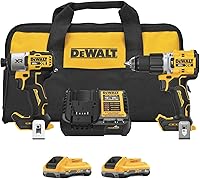
The DCK240C2 includes a DCD771 drill/driver, a DCF885 impact driver, two 20V MAX 1.3Ah lithium-ion batteries, a charger and a contractor bag. You get the core tools and power supplies for drilling and fastening.
DeWalt DCK240C2 Drill and Impact Driver Combo Kit

- DCD771 drill/driver
- DCF885 impact driver
- 2 included 1.3Ah batteries
- Charger and contractor bag
A practical kit for projects that alternate between drilling pilot holes and driving screws. Separate tools keep both bits ready, while two batteries let you power both tools.
Pros
- Separate tools reduce bit changes
- Compact designs help with confined work
- Both tools have LED lights with a 20-second delay
- Impact driver allows one-handed bit loading
Cons
- Smaller included batteries than the DCK277D2
- An extra tool to store if you rarely drive screws
How do the DeWalt DCK240C2 tools divide the work?
Use the drill for holes and controlled screw driving, then switch to the impact driver for repetitive fastening. Keeping separate bits installed is useful when attaching wood pieces, fitting brackets or building storage.
The drill delivers up to 300 UWO, while the impact driver delivers up to 1,400 in-lb of torque. UWO measures power and in-lb measures torque, so these numbers aren't a head-to-head comparison.
The impact driver's 1/4 in hex chuck allows one-handed loading and accepts 1 in bit tips. Choose bits intended for impact use, and match the tip to the screw head rather than forcing a loose fit.
Both tools have compact designs and LED work lights with a 20-second delay. Those features help inside cabinets, though you still need room for the bit, fastener and your hand behind the tool.
If you're choosing your first two-tool setup, our guide to the best drill and impact driver sets explains the wider options.
Which home projects justify buying both tools?
Buy both tools when your work repeatedly alternates between holes and fasteners. A project with dozens of pilot holes makes the second tool more useful than a repair involving 2 screws.
For a wooden storage unit, you can drill pilot holes with the drill and drive the screws with the impact driver. Clamps should hold the parts in place so neither tool has to pull a crooked joint into alignment.
Shelf brackets are another good fit, provided you choose fasteners for the wall material and expected load. The kit doesn't replace the need to locate framing or use suitable anchors.
Use more restraint on flat-pack furniture and cabinet hardware. Start screws straight, use the drill's clutch for control where appropriate, and finish delicate connections with a hand screwdriver.
Skip the combo for drilling-only tasks if you don't expect regular fastening work. Our cordless drill buying guide can help you choose a single tool without adding equipment you'll rarely use.
Concrete drilling and large holes need a separate tool decision. Identify the material, hole size and required drilling action before assuming a general drill-and-impact kit covers the job.
Should you choose the DCK240C2 or DCK277D2?
Choose the DCK277D2 for brushless tools and greater included battery capacity. The DCK240C2 remains a sensible match for occasional projects where having separate drilling and fastening tools is the main goal.
| Detail | DeWalt DCK240C2 | DeWalt DCK277D2 |
|---|---|---|
| Drill/driver | DCD771 | DCD777 |
| Impact driver | DCF885 | DCF787 |
| Included batteries | Two 1.3Ah packs | Two 2.0Ah packs |
| Impact driver torque | Up to 1,400 in-lb | 1,500 in-lb |
| Charger and bag | Included | Included |
| Brushless tools | Choose the DCK277D2 if this is required | Both tools are brushless |
The DCK277D2's larger packs give you more battery capacity to start with. Actual work per charge still depends on the material, bit, fastener and how hard you run the tools.
Its modest increase in impact torque shouldn't drive the whole decision. For household work, the brushless design and battery package are clearer reasons to choose it.
Skip the DCK277D2 if you don't need an impact driver at all. Moving to a different combo doesn't solve the problem of buying a second tool that will stay in the bag.
Our DCK240C2 vs DCK277D2 comparison covers the choice directly. For more detail on the alternative, read the DCK277D2 review.
When do the Craftsman and Milwaukee alternatives make more sense?
Choose Craftsman for a V20 setup or Milwaukee for short tools in cramped work areas. Those are more useful reasons to change brands than a small difference in maximum torque.
Craftsman V20 for a household building around one system
The Craftsman kit pairs a CMCD700 drill/driver with a CMCF800 impact driver. It includes two batteries, a charger, a storage bag, a PH #2 bit and a double-sided bit.
Its drill provides 280 UWO and a 2-speed gearbox with ranges of 0–350 and 0–1,500 RPM. The impact driver provides 1,460 in-lb, and both tools have LED lights.
Choose it if Craftsman V20 is the system you want to build around. Check compatibility by exact battery and tool model; matching voltage numbers across brands don't make packs interchangeable.
Skip it if it would add a separate charging setup without solving a particular need. The included bits are useful starters, but you'll still need drill bits and tips that match your projects.
Milwaukee M12 for confined and overhead work
The Milwaukee M12 brushless kit makes sense when tool length and handling space come first. Its drill is 5.4 in long, and its impact driver is 4.3 in long.
Milwaukee gives tool weights with CP batteries of 2 lb for the drill and 1.7 lb for the impact driver. Those figures are useful when planning repeated overhead work, where the battery forms part of the load you hold.
The drill has a metal 3/8 in chuck, and the impact driver delivers 1,100 in-lb. Check the shank diameter of any drill bits you already own, since larger round shanks won't fit that chuck.
Choose it for cabinet interiors and repairs where a shorter body helps you line up straight. Skip it if your required bits won't fit or keeping one battery system matters more than reducing tool length.
Confirm the Milwaukee package contents before ordering, including batteries and charging equipment. Our 12V vs 20V drill guide explains how to match these tool classes to home jobs.
How should you set up the DCK240C2 for a first project?
Start with the right bit, a secure workpiece and a charged battery. A complete combo kit still needs accessories chosen for your material and fasteners.
- Read the tool and charger instructions. Follow the charging directions and learn the controls before fitting a bit.
- Remove the battery for bit changes. Seat the drill bit straight and tighten the chuck securely.
- Check the driver bit. Use the correct tip shape and size, and confirm that the impact driver's bit is locked in place.
- Secure the work. Clamp loose material and check behind the drilling area for wires, pipes or other hazards.
- Start slowly. Keep the tool aligned, then increase speed as the bit begins cutting or the screw takes hold.
Wear eye protection and keep loose clothing clear of rotating parts. Use hearing protection when impact driving, especially during repeated fastening indoors.
For wood screws, size the pilot hole to the screw and material rather than using one drill bit for everything. Dense wood and work near an edge deserve particular care because driving a screw can split the piece.
Make a trial hole or drive a spare screw in scrap material when possible. This helps you choose a suitable setup before making a visible hole or marking a finished surface.
Our guide to using a cordless drill walks through chuck setup, speed choice and controlled driving.
Which mistakes cause the most trouble?
The main mistakes are using the wrong bit, forcing the tool and driving past the point where the screw is seated. More trigger pressure won't correct poor alignment or an unsuitable accessory.
Using the impact driver for every screw
An impact driver is useful for repeated fastening, but delicate hardware needs a lighter approach. Small screws, soft wood and plastic fittings can be damaged before you realize you've gone too far.
Start slowly and ease off as the screw head approaches the surface. For a final snug fit on fragile parts, use a hand screwdriver.
Leaning harder when drilling slows
A dull bit, packed chips or the wrong speed can make a hole harder to drill. Stop and check the cause rather than using your body weight to force progress.
Keep the bit straight, clear chips as needed and let it cool before handling it. If the bit binds, release the trigger and work out why before continuing.
Expecting the tool light to cover the whole job
The built-in LEDs help near the bit, but cabinets and deep corners can still cast shadows. Add a work light when you can't clearly see the drilling point or screw head.
Good light also helps you spot a bit slipping out of a fastener before it damages the head.
How do you manage the batteries and care for the kit?
Plan around short work sessions and sensible charging breaks, especially with the DCK240C2's smaller included packs. Two batteries let you power both tools, but that leaves neither battery free to charge.
If one tool does most of the work, keep the other pack available for a swap. For a longer project, think through charging access before carrying the kit somewhere without an outlet.
Stop if a tool or battery becomes unusually hot, and follow the manual's cooling guidance. Don't keep pulling the trigger against a stalled bit or stuck fastener.
After use, remove loose dust with a dry cloth or soft brush and keep ventilation openings clear. Keep batteries and chargers dry, and protect battery contacts from loose screws or other metal objects.
Store sharp bits so their cutting edges don't knock together in the bag. Check worn driver tips early, since a rounded tip can damage screw heads even when the tool is working normally.
Who should buy the DeWalt DCK240C2?
Buy the DeWalt DCK240C2 for weekend projects with repeated drilling and fastening. Its strongest reason to buy is having 2 ready tools, with batteries, charging equipment and storage in one kit.
Choose the DCK277D2 for frequent DIY work when brushless tools and larger included packs are priorities. Choose Craftsman if you're building around V20, or Milwaukee when short tool bodies solve a real access problem.
If you want DeWalt but remain unsure about buying a combo, compare the best DeWalt drills. That keeps the decision focused on the tool you'll use most.
For occasional household holes and a few screws, start with the best cordless drills for home use. Choose the DCK240C2 when your next projects give the impact driver regular work alongside the drill.
Frequently asked questions
What tools come in the DeWalt DCK240C2?
The DCK240C2 includes a DCD771 20V MAX drill/driver and a DCF885 20V MAX impact driver. You also get two 1.3Ah lithium-ion batteries, a charger and a contractor bag.
Plan your drill bits and driver tips around the holes and fasteners your project requires.
How much torque does the DCK240C2 impact driver deliver?
The DCK240C2 impact driver delivers up to 1,400 in-lb of torque. The drill has a separate output figure of up to 300 UWO, which measures power rather than torque.
For assembly work, matching the bit and stopping before the screw sinks too far matter more than chasing maximum output.
Which DeWalt kit should you choose for brushless tools?
Choose the DCK277D2 if you want brushless tools and greater included battery capacity. It pairs a DCD777 drill/driver with a DCF787 impact driver and includes two 2.0Ah batteries, a charger and a contractor bag.
That makes it the stronger fit for buyers planning frequent DIY sessions.
Can you use the DCK240C2 impact driver for drilling?
Yes, with suitable impact-rated hex-shank drill bits, but use the kit's drill/driver for routine hole drilling. It provides a more natural setup for choosing drilling speed and holding different bit shanks.
Read our guide to using an impact driver as a drill before buying accessories for that purpose.