Do You Need a Hammer Drill at Home?
You need a hammer drill for repeated holes in brick, block, or concrete, but a regular drill suits most other home jobs. For a few holes in dense concrete, renting a rotary hammer may be the better choice.
On this page (8 sections)
- When do you need a hammer drill at home?
- Is a hammer drill different from a regular drill?
- What else do you need to drill masonry?
- Which hammer drill features matter for home projects?
- How should you set up and drill an anchor hole?
- What mistakes slow masonry drilling or damage bits?
- When is a rotary hammer a better choice?
- Should you buy a hammer drill for your home?
You need a hammer drill if you expect to make repeated holes in brick, block, or concrete. For furniture assembly, wood projects, metal brackets, and most household screws, a regular drill is enough.
A hammer drill turns the bit while tapping it forward, helping a masonry bit break through hard material. With hammer mode off, it works as an ordinary drill, so it can be your main home drill if masonry jobs are part of the plan.
DEWALT explains this action in its guide to how hammer drills work.
When do you need a hammer drill at home?
Buy a hammer drill when masonry anchor holes are a recurring job, such as mounting brackets on a brick garage wall or adding fixtures to block walls. Choose based on the wall material, required hole size, and number of holes.
For 1 or 2 small holes in softer brick, a regular drill with a masonry bit may manage. Borrowing or renting makes more sense if your existing drill struggles and you have no other masonry work planned.
Concrete deserves a closer look because its hardness and aggregate vary. A tool that makes steady progress in brick may struggle in a concrete slab, even with the correct bit.
If most projects involve wood, metal, or household repairs, start with a regular cordless drill for home use. You don't need hammer action simply because you're buying your first drill.
Do I need a hammer drill for every wall?
No, the material behind the finish determines the tool. Drywall and wood studs need ordinary drilling, while brick or block behind plaster may call for masonry bits and hammer action.
Tile, glass, and fragile finishes need their own bits and methods. Don't start in hammer mode just because concrete sits behind the surface; follow the bit and surface instructions through each layer.
Check for wiring, pipes, and other hidden services before drilling. Avoid uncertain locations, especially near outlets, switches, plumbing fixtures, and the opposite side of the wall.
Is a hammer drill different from a regular drill?
A hammer drill adds forward tapping to normal rotation, while a regular drill only turns the bit. That extra action helps in masonry but should stay off for wood, metal, plastic, and driving screws.
The mode selector and speed selector do different jobs. One chooses how the tool works; the other changes its speed range, so selecting a slower gear doesn't switch hammer action off.
An impact driver is different again: its rotational impacts help turn fasteners. It isn't a substitute for a hammer drill when you're making masonry anchor holes.
For a direct comparison, read which fits home jobs: a drill driver or hammer drill. The broader drill and impact guide explains how these tools fit into a home toolkit.
What else do you need to drill masonry?
You need a compatible masonry bit and the correct anchor, not just a drill with hammer mode. Match the bit diameter and hole depth to the anchor instructions, including any required clearance beyond the anchor.
Check shank compatibility before buying bits. Straight-shank masonry bits fit suitable standard chucks; SDS bits use a different holding system and belong in compatible rotary hammers.
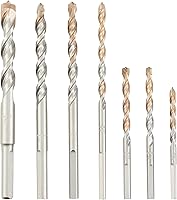
The DeWalt DW5207 7-Piece Masonry Drill Bit Set suits standard-chuck drilling for mechanical anchors. It has carbide tips and 4 flutes, which DEWALT says help clear debris from the hole.
Choose this set if its diameters match several planned anchors. It includes 3/16, 1/4, 5/16, 3/8, and 1/2 in sizes, with multiple 1/4 in bits.
Skip it if you need only one size outside that range or bits for an SDS rotary hammer. For more on matching tools to the material, read whether a cordless drill can drill into concrete.
Which hammer drill features matter for home projects?
Choose for access, control, battery compatibility, and your actual hole sizes. A powerful drill adds little value if it won't fit between obstructions or requires a battery system you'll rarely use.
All 3 drills below use brushless motors and are sold without a battery or charger. If you're starting from scratch, compare the complete setup cost with a kit rather than judging the bare tool alone.
DeWalt DCD806B: for mixed home drilling
The DCD806B suits homeowners who want one drill for ordinary projects and recurring masonry holes. Its 2 speed ranges cover 0–650 and 0–2,000 rpm, giving you a slower range for controlled work and a faster range for suitable drilling tasks.
Its 1/2 in metal ratcheting chuck holds the bit, and the adjustable 3-position LED helps light the work area. DEWALT's ANTI-ROTATION system shuts the tool down if it senses excessive rotational movement.
Choose it if varied drilling jobs justify a tool beyond basic furniture assembly. Skip it if your existing drill meets your needs and your only masonry project is a single bracket.
DeWalt DCD1007B: for demanding drilling projects
The DCD1007B suits buyers planning larger-diameter holes and more demanding work in wood, metal, or masonry. Its 3-speed all-metal transmission gives you more gear choices, and it also includes an ANTI-ROTATION system.
The ratcheting metal chuck has carbide inserts for bit retention, while a pivoting light helps aim illumination. These features suit a buyer choosing around demanding jobs rather than occasional small anchor holes.
Skip it for light repairs or if easier handling matters more than demanding drilling capacity. For repeated work in hard concrete, compare it with a rotary hammer before deciding that a larger conventional hammer drill is the answer.
DeWalt DCD799B: for restricted access
The DCD799B suits work near corners, inside confined areas, or between obstructions. Its 6.49 in tool head makes access the main reason to choose it over the other models here.
It reaches up to 1,650 rpm and has an on-tool LED. Check the whole working space, though: the bit, battery, and room for your hands all add to the clearance you need.
Choose it when a shorter tool solves a real access problem. Skip it if most work happens in open spaces and your priority is choosing a tool for larger, repeated masonry holes.
For more options organized around home projects, see our hammer drills for home use.
How should you set up and drill an anchor hole?
Start with the anchor's required diameter and depth, then set up the drill for the surface. A neat hole in the wrong size won't give the anchor the fit it needs.
- Check the location. Confirm the wall material, look for hidden services, and make sure the anchor suits solid or hollow masonry as appropriate.
- Fit the bit securely. Remove the battery before fitting or changing bits, tighten the chuck as directed, and check that the bit runs straight.
- Mark the depth. Use a depth stop where available, or a visible depth mark on the bit, allowing the clearance required by the anchor.
- Set the mode and speed. Follow the drill and bit instructions, and start slowly enough to keep the tip on the mark.
- Drill with steady pressure. Keep the bit square to the surface and withdraw it periodically to clear debris rather than forcing it deeper.
- Clean the hole. Follow the anchor's cleaning method before installing it; loose dust can prevent a proper fit.
Wear eye and hearing protection and use suitable dust control for masonry dust. Don't blow dust out with your mouth or brush it toward your face.
Support the drill with both hands where the design allows, using a side handle when supplied and required. Keep a balanced stance so you can release the trigger if the bit binds.
What mistakes slow masonry drilling or damage bits?
The biggest mistakes are using the wrong bit, forcing a stalled cut, and leaving dust packed in the hole. More pressure won't fix an unsuitable tool or a worn cutting tip.
If progress stops, release the trigger and inspect the setup after the bit stops. Don't assume the answer is more force, especially if you may have reached metal or another hidden obstruction.
Don't enlarge an anchor hole by rocking the drill sideways. Keep the hole straight and use the specified bit size; an oversized hole may leave the anchor unable to grip.
Let a hot bit cool before handling or storing it. Remove the battery before maintenance, clear dust from the tool's exterior and vents as its manual directs, and store bits dry.
Replace bent bits and those with damaged carbide tips. A fresh bit can restore useful progress, but it won't turn a light drilling setup into the right tool for heavy concrete work.
When is a rotary hammer a better choice?
Choose a rotary hammer for repeated holes in dense concrete, deeper drilling, or larger holes beyond a hammer drill's recommended range. Its different hammer mechanism makes it better suited to heavier masonry work.
Check the tool's capacity for your exact bit diameter and material. A claim about drilling wood doesn't establish how quickly a tool will make the same number of holes in concrete.
For a one-time concrete project, renting a rotary hammer with the correct bit can be more practical than buying another cordless drill. Confirm whether the rental includes suitable dust extraction and the accessories your job requires.
Should you buy a hammer drill for your home?
Your answer to “do I need a hammer drill?” should follow the next project you can name. Buy one for recurring masonry anchor holes, keep a regular drill for wood and metal, and rent a rotary hammer for a short run of demanding concrete work.
Choose the DCD806B for mixed drilling, the DCD1007B for demanding projects, or the DCD799B when restricted access drives the decision. Add the DW5207 bits only if their sizes match your anchors and your tool accepts them.
Before starting, confirm the wall material and anchor instructions. For help with mode selection, bit fitting, and everyday control, follow our guide to using a cordless drill.
Frequently asked questions
Do I need a hammer drill to hang pictures?
Usually, no. Many picture hooks need no drilled hole, and a regular drill handles pilot holes in wood or drywall.
For anchors in brick, block, or concrete, a hammer drill can help. Choose the anchor for both the wall material and the weight you're hanging.
Can a regular cordless drill drill into brick?
Yes, a regular cordless drill can sometimes make small holes in softer brick with a masonry bit. Harder brick may need hammer action, while dense concrete can call for a rotary hammer.
If progress stops, inspect the bit and setup instead of pressing harder or running the drill longer.
Can I use hammer mode for wood or metal?
No, use ordinary drill mode for wood and metal, with a bit made for that material. Hammer action can damage the hole or bit without helping the cut.
For driving screws, select the screwdriving mode and start with a low clutch setting, then increase it only as needed.
Is a hammer drill the same as an impact driver?
No, a hammer drill taps the bit forward to help drill masonry, while an impact driver applies rotational impacts to turn fasteners. For long screws and repeated fastening, read our impact driver guide.
Choose between them by the work you need to do, rather than the word impact.